Salaam Alaikum, Sajjal.

mary and jesus in persian miniature
https://en.wikipedia.org/wiki/Mary_in_Islam

Dear Sajjal,

I wonder how you bear it all each day.

I had forgotten how much hate eyes can spew. I thought I would be able to do what women in Sweden did after a pregnant Muslim woman was viciously attacked. I thought that I too could show my support for you and all Muslim women by wearing a scarf on my head in public.

I lasted two days.

I’m sorry.

I have not felt so scared in public in a long time.

It was easier to spot a racist when I grew up in South Africa. Quite ‘normal’ to assume a certain demeanour around White people, to be guarded and careful not to do anything that may invite an attack.

After being here for 25 years, I’d let that guard down, settled into feeling safe, protected by the Canadian Charter of Rights and Freedoms.

But when I covered my hair with a scarf as I went about my day this week, I felt as though I had a target on my head.

What is it about the scarf that incites such hatred?

I’m not sure if you know this but in Ancient Greece a women’s head covering was called a himation, although what Mary wore on her journey from Nazareth to Bethlehem was called a mantle. (By the way, I didn’t know that Mary is mentioned more often in the Quran than she is in the Bible!)

In Medieval Europe women covered their heads and necks in a wimple but in many places in Eastern Europe today it’s called a babushka, in Spain a mantilla, in India a pallu.

Whatever it’s called, the tradition of a woman covering her head as an indication of piety and modesty has a long history. But in the future historians will note that when Muslim women covered their heads in the early 21st century, they were targeted for vicious attacks whilst Christian nuns who cover the heads in habits, do not suffer the same fate.

If you were still my student and I still your teacher, we could explore the roots of the hate through Media Studies. It would be quite an easy exercise to find multiple examples of how the media has been magnifying the hate while all but ignoring the voices of reason and compassion.

But I know that understanding would not make the indignities any easier to bear.

I’m sorry that what I taught you about human rights and civil rights can provide no comfort or protection from the ignorance and fear that fuels the hate you experience daily.

You have quite an insightful mind so I would not be surprised if you wonder at the irony of the upcoming Christmas celebrations when there will be images of Mary everywhere.

Mary, with her head covered,  seeking shelter.

I know that your big heart will lead you to do all that you can to help the Syrian refugees who are about to find out what you already know about the two kinds of Canada – the one that vilifies women who cover their heads, and the other that celebrates the birth of the son of one with wishes of peace and joy.

I would love to be able to do more than just wish you peace.

But a wish for peace is all that I have now.

Salaam Alaikum, Sajjal.

A Christmas Story

goat
http://mediaincanada.com/2012/11/06/plan-canada-promotes-gifts-of-hope/

I got a goat for Christmas once. It came with a bottle of wine. I enjoyed drinking the wine but didn’t actually see the goat because it was sent on my behalf to a family who really needed its milk to survive. I thought about the family and the goat while listening to Christmas music in a store yesterday. Wondered if the goat had really made a big difference in their lives, as advertised.

When I was a child, I remember feeling an overwhelming sadness whenever my mother sang Nat King Cole’s The Little Boy that Santa Claus forgot. I remember being baffled about how anyone could not have presents under the tree, when I had so many. Even now, decades later, my heart hurts whenever I hear that song.

The Christmas season is complicated for me. I struggle to reconcile the lavish consumption with the stark realities of the suffering of millions.  I can’t seem to connect the dots between the messages of peace, joy and love with the lack of compassion for those unlucky enough to be born in places that are war-torn.

For half my life Christmas was the season of summer, hot days and nights, beach picnics, surfing Santas on gift wrapping paper. The pictures of snow and holly trees on the Christmas cards  we received seemed to come from another world. I remember wondering what it must be like to live in such a world, it seemed so peaceful.

Peace was not a concept that had much real word meaning for many of us. We lived in constant anticipation of the next explosion, the next arrest of political activists fighting the Apartheid regime.

Peace has been a much more tangible concept for me since I came to Canada but a month after an election that was in some sense a test of Canadian values, we are faced once again with questions about what kind of Canada we live in.

Days after the horrific attacks in Paris, petitions are circulating calling for the cancellation of the promise of sanctuary for 25 000 people, refugees whose homes had become the sites for daily attacks like the one in Paris, the one in Beirut, the one at Garissa University in Kenya.

I wonder if those signing the petitions are also signing Christmas cards wishing others peace, joy and love at Christmas?

I wonder if they remember the details of the Christmas story: a Middle Eastern man, seeking shelter for his pregnant wife.  The story of the many who turned the strangers away, the one who offered sanctuary.

Many Arabs offered sanctuary to Jewish people during the Holocaust, sometimes disguising them as Muslims to take them to safety. Would knowing facts like these help to open the hearts and minds so closed to welcoming refugees?

A Christmas shopping catalogue arrived in my mailbox this week. It’s filled with wonderful images of happy families sitting around in beautiful clothing. The message is that if I buy the clothing, I too will have a happy Christmas.

I’d rather get a goat.

When fear and ignorance fuel hate

fear ignorance hate
https://pbs.twimg.com/media/BzJEvEXCYAA7jYd.jpg

The man who spat at her didn’t know her. He didn’t know her name or the fact that it meant ‘beautiful’ in Urdu. He didn’t know that she was a talented artist and a brilliant student. He didn’t know about all her hard work raising funds for cancer research or the long hours she spent increasing environmental awareness in our school. He knew nothing of this. All he knew was that she was wearing a hijab and her choice to do so made her a target for his hatred.

Days after the 9/11 attacks, an American-Sikh man, Balbir Singh Sodhi, was killed by someone who told friends he was going out “to shoot some towel heads”. Beyond the fact of the killer’s ignorance of the difference between Sikhism and Islam is the fact that the killer’s religion was not cited as a reason for his attack.

In these hours after the attacks in Paris, I wait with bated breath for the hate attacks to begin, as I know they will. I tense as I scroll through headlines, hoping I don’t see anything like “Pregnant Muslim woman attacked by Montreal teens”.  I hope that instead I see headlines like “Train passenger defends Muslim woman against hateful rant”. I hope I see more of those.

But history shows my hope may be in vain. There have been too many times in our Canadian history, in battles between hate and compassion, when hate won.

It won when the Komagatu Maru, carrying British citizens of the Sikh faith, was turned away in Vancouver in 1914. It won when the St. Louis, carrying Jewish people fleeing Nazi occupied Europe, was denied entry into Halifax in 1938. It won when Japanese Canadians were interned after the Pearl Harbour attack despite the fact that the RCMP said that they posed no threat to Canada in 1942.

Will hate win again now in the aftermath of the horror of the attacks on Paris?

Online comments on Prime Minister Trudeau’s response to the attacks leads me to believe that it may. The commenters say that we should stop the immigration of Syrian refugees. They claim that the refugees are just terrorists in disguise. I wonder if the commenters have met a refugee?

There are 60 million refugees waiting in thousands of camps all around the world today. People who were engineers, doctors, teachers, students, farmers, shopkeepers before they were refugees.  People who were going about their lives, working, studying, raising children, when war or famine made that daily life impossible.

The Syrian refugees, like millions of others, fled their homes after a multitude of attacks like the one in Paris. A multitude of attacks that did not get wall-to-wall media coverage here.

As I write this, the furnace has just clicked on, the kettle is whistling and I’ll soon be enjoying a nice cup of tea while I read the newspaper in peace and quiet. But my enjoyment of this ordinary pleasure will be tinged with anxiety about how my fellow Canadians will respond to hatred’s rally call.

In the recent federal election, the Harper Conservatives used a niqab to fan the flames of hatred, but Canadians overwhelming rejected that attempt to divide citizens from each other.  Does that rejection still hold today?

I worry about my students, the ones who wear the hijab, who wear a turban, who are visibly different to a racist view of what a Canadian looks like.  

I wonder what my students think about our Social Studies lessons on the rights and responsibilities of citizenship in Canada. I wonder if they have developed some cynicism about all the claims made about who and what the Charter of Rights and Freedoms protects.

Canada’s 2015 election was historic for many reasons other than its length. At the end of it, Canada had a cabinet that “looked like Canada” in all its diversity.  Is it too much to hope that we can continue to see that what it means to be Canadian includes a diversity of colours and creeds?

My student shrugged at the end of telling me the story of that hate-filled attack on her. She seemed resigned to its reality. I wish more than anything else in the world that she didn’t have to be.

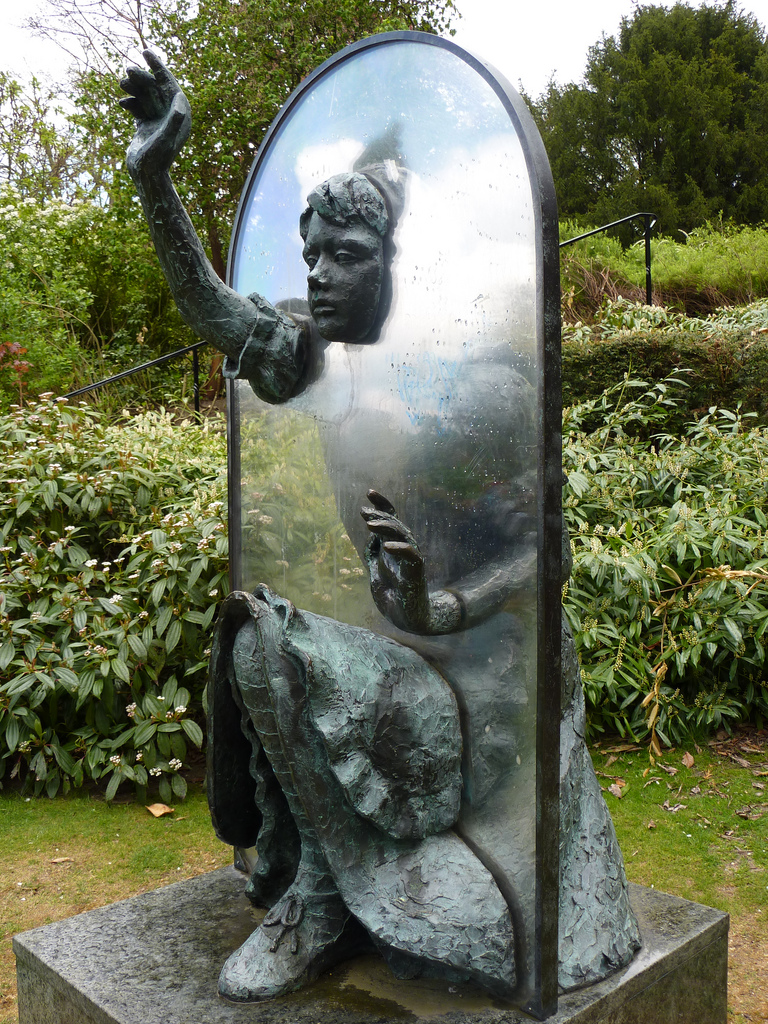
Cellphones: Alice’s Looking Glass in the 21st century

alice looking glass
http://www.geograph.org.uk/photo/2859504

I’ve been haunted by the images in the videos taken in the classroom at Spring Valley High  while a police officer, called to the classroom because a student refused to give up a cellphone, is seen violently throwing the student around.  That the student had been recently placed in foster care made the event that more tragic. In one of the videos, one can see the back of the teacher who had supposedly called on the principal when the student refused to put her cellphone away. When the principal could not convince the student to give up her phone, the police officer was called.

The incident made international news on Monday, 26th October, a day after Yale University Center for Emotional Intelligence released a study that revealed that 75% of students in Grades 9 – 12 felt either tired, stressed or bored at school.

Did the student who refused to give up her phone feel bored or stressed or was she just feeling lonely?

I had long been aware that students would use their cellphones when they felt bored but it had never occurred to me that they may also do so because they felt lonely. But loneliness was one of the reasons my students gave for why they use cellphones in the classroom when I asked them to respond to a totally unscientific survey I conducted after a classroom discussion about the Spring Valley incident.

Although there are many discussions within education about whether teachers should or should not allow students to use cellphones in the classroom, and despite there being a growing awareness of the connection between emotions and learning, what may be missing is a conversation about connections between students’ emotional experiences in the classroom and what could be called students’ addiction to their phones.

While some students told me that they use their phones to “look up” something or to check spelling or for calculations, many students told me that they use their phones as an escape out of the classroom when they’re feeling bored or lonely. As this student says:

I use my cell because even though it might not be allowed in my class, I get the urge to check it because I always think there might be a message from a friend. But sometimes I guess I’m so used to it, I just automatically assume that I need to use it. Sometimes when there’s nothing to do in class because I’ve done my work or my test, I’ll use it for entertainment or to seem like I’m not just sitting there with nothing to do.

Like when I go to French 10, I don’t really talk to a lot of the grade 10s and so I go on my phone to distract myself or to make it seem like others think I actually have a life. … I can’t live without a social life. I need people to converse with so I can have a better time in class or school itself.

So it appears that, apart from all the features normally advertised, a smartphone can also act like Alice’s Looking glass and transport students out of the classroom into another world, one where they have a social life and are not bored or lonely.

But why can’t classrooms be places from which students do not want to escape? Why can’t they be places of excitement and engagement, the way they look to a 5-year-old on the first day of kindergarten?

What is being revealed about what is happening in  high school classrooms when a police officer is called to discipline a student? Not because she had a gun, not because she was being violent, but simply because she refused to give up her cellphone, her escape route from boredom and loneliness.  

What will it take to create classrooms that students want to run to, not escape from, classrooms that are the entry into a world on the other side of the Looking Glass? 

Laughter is the true test of success

laughter
Credit Chris Huggins/flickr creative commons

I have a confession. I am a high school teacher who doesn’t care about how many As my students get or how many are on the Honour Roll.  In fact, I dislike high stakes tests as much as my students do. If we do have tests, they’re frequently open book. I tell my students that tests test how well you can do tests.  And so I do not “teach to the test” but I do teach my students how to do tests. Much of the lesson relates to how to combat test stress.

What do I care about most is how my students feel when they’re in my classroom. This is the most critical indicator of whether my students are learning or not. It’s the ground upon which I build my teaching practice.

On my recent trip to Italy, I was surprised and thrilled when Tullio De Mauro, a former Minister of Education expressed a similar idea. We were in a moderated dialogue during Internazionale a Ferrara 2015 when he said that the evaluation that teachers should be concerned about most is their students’ evaluation of their time in the classroom. We agreed that the physical space of the classroom did not matter as much as the emotional space that was created.

It’s wonderful to have a former Minister of Education in Italy espouse the importance of a hospitable classroom but what will it take to have all current politicians here in North America realize this truth? All across Canada and the United States, the powers that be insist on testing as a way to increase student achievement despite innumerable studies that reveal the failure of this approach.  I wonder if anything will change now that the White House recently called for limits on the number of tests that students are subjected to?  

I suspect it will take many more years before the stress of tests is a thing of the past for students.

But tests are not the only source of students’ stress in school. Most of us have vivid memories of a whole range of situations and experiences that made school a place we didn’t always want to be. When I was a student, I was frequently afraid or bored or tired even though I achieved many As. Turns out not much has changed over the decades since my high school graduation. A study released last week, reveals that 75% of high school students (Grades 9 – 12) feel either bored or tired or stressed.

The biggest tragedy of this for me is how much we are wasting the creativity of our adolescents. Just when their brains are developing the ability to think abstractly and to be creative, we bore them with forced memorization of facts we already know and that they can instantaneously access on the phones. Despite this travesty, there are growing numbers of teens who are simply going ahead and solving problems we adults had not been able to.

Ken Robinson’s  Do Schools Kill Creativity? talk has over 35 million views. Clearly there are many people around the world aware of what we are doing to our students’ creative potential so why do we continue to do this?

My students’ creativity constantly amazes me. I am often in awe of how they respond to assignments where their imaginations have free reign. I love evaluating those assignments because each one is unique, each student’s interpretation an expression of how alike and unlike they all are. When a final exam response includes the performance of a spoken word poem along with a brilliant talk punctuated by laughter, stress and boredom are simply not in the room.

But laughter does not come easily to me. I am by nature rather serious and so I’ve had to work hard at creating circumstances in my classroom where laughter is a frequent and welcome visitor. I have taken a course about laughter in which I learned about how well our bodies and minds respond to laughter.  I discovered that laughter is actually quite a serious matter!

In fact, it turns out there is a link between laughter and creativity. The more you laugh, the more creative you are when solving problems. Wouldn’t it be great if students could have a laughing session before each test? There’s a research study that needs to be done!  

Each school year many of my students make it onto the Honour Roll, many also achieve the coveted As but what I care about the most is how they felt and how often they laughed when they were in my classroom. They’ll remember that for much longer than they’ll remember what was on a test.

The more things change, the more they stay the same

Geese on Lake at Kripalu

Maybe it’s because the season is changing or maybe it’s because the future became the past this week, but I’ve been thinking about 1985 a lot lately, trying to remember what my life was like back then. At the time I was a teacher in South Africa, teaching in an apartheid-era classroom that was overcrowded and underfunded.

Today I teach in a classroom in a rich province with the second-lowest per student funding in Canada. The biggest difference between my classroom in 1985 and my classroom in 2015 is that back then I used chalk, and now I don’t.

Back then, my government considered me a second-class citizen. Thanks to the Harper government’s C24 legislation, I am that, once again.

Back then, education in South Africa was one of the levers the government used to perpetuate Apartheid and was certainly not meant to open worlds of possibilities to students who were not White.

Today, in the guise of “reform” education is seen as a viable investment sector by multinational corporations at the same time that students are considered as nothing more than pre-workers through policies like the BC Skills for Jobs Blueprint.

It seems that it’s true that the more things change, the more they stay the same.

But there is something that is very different in my experiences as a teacher in 1985 and my experiences as a teacher today.

Back then, whenever I advocated for more hospitable classrooms and a more humane treatment of students, I was met with backlash and derision. The opposite happens today.

Thirty years after my principal, Mr Gulston, told me that my colleagues were “just not ready” for my ideas, I was invited to Italy this month to talk about those ideas. It was an experience that was manna for my teaching soul. I do not think I have enough words to fully express my gratitude, and how humbled I feel about it all.

One of the highlights of the trip was conducting a full-day workshop in Florence in a room at Ospedale degli Innocenti (Hospital of the Innocents), a place that first welcomed and accepted abandoned babies during the Renaissance.

florence 2

During the workshop I talked about and demonstrated how I try to make my classroom a welcoming space for my students. This includes the occasional dancing!  And so there we were,  Italian researchers and teachers, putting on our best grooves to UpTown Funk during one of our brain breaks. So much fun!

One of the biggest differences between talking about creating a welcoming space for students in 1985 and doing so in 2015 is that these days I can point to neuroscience for support.

I can refer to research when I talk about the connections between emotions and learning, that learning is primarily a social process, one based on relationship. I wish I had books like Brain Targeted Teaching back in 1985! And I really could have used easy access to organizations like CASEL (Collaborative for Academic, Social and Emotional Learning).

Back then all I had was blind intuition until, by some stroke of serendipity, an organization funded by international donors set up a library just a block down the road from the school where I taught.

The organization, SACHED, had a mandate to support in various ways, non-white students studying at universities.

The first time I borrowed a book from that library, it was like a whole new world opened up for me. There were ideas about teaching I had not seen anywhere in my teacher training or in any classroom I had attended as a student. I could not keep the books for long periods though and I could not buy them anywhere since the South African government censored or banned anything progressive in art or literature or academia.

Perhaps then you can understand my being dumbfounded by the fact that, despite the abundance of research on how critically important the creation of a socially and emotionally safe space is for learning, so much of what we do in schools completely ignores what we know.

We know that sitting for long hours is unhealthy for brains and bodies and yet students still sit for 6 hours a day, for 10 months a year, for 13 years of their lives.

We know that most teens are sleep deprived and that they are most alert and ready for learning at 10am in the morning and yet we continue to pile them with homework that keeps them working for hours each night and then insist that they show up to school early each morning.

We know that the next 30 years is going be unlike the last 30 and yet we continue to demand students regurgitate all that we already know instead of nurturing their creativity to explore the things we don’t.

It was a humbling experience to be in Italy, to be in buildings hundreds of years old, to see from hindsight, the unfolding of our civilization, our artistic and scientific knowledge.

I wonder what people in 2045 will think of us when they look back at this time.

Right now, education reform in both Canada and Italy is being driven by economic goals instead of educational ones. In both countries, teachers are under attack, their professionalism being questioned. And in both countries, education is a political football, with students losing the most.

Is it too much to hope that by 2045, teachers then will be able to point to a time now when there was a dramatic shift in public education, when neoliberal reform of schools was rejected and replaced by policies that truly have our children’s future in mind? Wouldn’t it be wonderful if teachers at the middle of the 21st century could point to the beginnings of a second Renaissance, one in education?

This week I watched as election results showed that Canadians had overwhelming rejected  the xenophobia of the Harper government. With a new government in place, I can look forward to being an ordinary citizen like everyone else, once again.

I hope that my students, and those I met in Italy, will not only witness in their lifetimes, a radical shift in the structure and functioning of the place we call school, but they will also see the success of social and political policies indicative of the better angels of our human nature.

The past and the future are always present

clock
http://openphoto.net/gallery/image/view/6675

During the recent media hype about the Back to the Future trilogy, I wondered what the Marty McFlys in schools today would find if they travelled to the future, say 21 October 2045. I wonder if they’d discover classrooms just like the ones they’re in today, where students spend much time studying the past and not nearly enough time in classrooms considering how the present may shape the future.

I’ve also been wondering what students in the future will think of what we do now, in our present that is their past. I wonder if they too would want to travel back in time to change the choices we are making now.

To those of us who’ve been here a while, 1985 seems like yesterday. Hard to believe that three decades can disappear so quickly.

The Internet was still three years away in 1985. Video games, new in 1980, were developing quite rapidly. The Macintosh personal computer was one year old. And the hole in the ozone layer had just been discovered.

Now here we are in a world where today’s Marty McFlys carry in their pockets a device that can provide endless video game entertainment and also instant access to all human knowledge, including nanosecond updates of massive, “historical” hurricanes.

Would hurricanes like Patricia have emerged if we had acted on what we knew about climate change thirty years ago?

I worry a lot about the choices we are collectively making today, choices that are already shaping the world of tomorrow. I wish the impact on the next seven generations was considered in all those choices.

In Back to the Future, Marty McFly has to make sure that two people make the right choice in 1955. Marty’s very existence depends on that choice, after all.

What might teens living in 2045 want us to change about the choices we are making today since their existence depends on us?

Students in my classroom wonder about the impact of their choices quite a bit. Most of their concerns are about choices in careers  but they also wonder about the big questions in life. One of them asked me this week if each choice we make generated a whole different universe and if there were multiple universes created when other choices were made.

I said I didn’t know.

But what I do know is that in this world now, here, today, we are shaping the world our families will live in tomorrow.

The future, like the past, is always present.

New Curriculum not meant for BC public schools

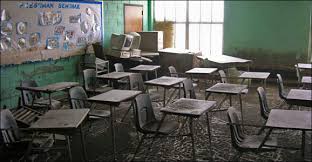
dilapadated classrooms

I’ve been wracking my brain trying to figure out how the new curriculum could be implemented in all the classrooms I know.  I could not fathom how a teacher could personalize learning for all 30 of her students when half of them who needed support of one kind or another were not getting it. Education assistants were considered a salary benefit outside of the “affordability zone” during the labour dispute last year, remember?  

Each time I tried to imagine what personalized learning would look like in overcrowded classrooms with outdated technology, my mind sent me 404 error messages. Nothing computed.

But, after reading all the commentary about the new curriculum, it hit me!  The new curriculum is not meant for the kinds of classrooms I know. It’s not meant for underfunded public schools.

The new curriculum is meant for private schools where there are only 15 students and unlimited resources in each classroom. It’s in private school classrooms that personalized learning would fit seamlessly.

The more I thought about it, the less confused I became. The BC Liberal government has been doing the private school industry many favours lately. We taxpayers provided private schools with $311 million this year. The BC Liberal government has also decided, on our behalf, that private schools should get a break from municipal taxes because government revenue didn’t really need the $5million in taxes that would have been due.  And to ensure that the BC Liberal government  doesn’t miss any more opportunities to help the private school industry, they’ve appointed a new advocate who will keep the Premier up to date with what private schools need.

The needs of public schools fall on deaf ears. I am astounded that Premier Clark is unashamed of the fact that a newspaper runs a charity that provides funds for schools. A charity started after a teacher’s letter pleading for shoes for her students went viral.  I suppose that’s one way we public school teachers can personalize what happens in our classrooms: we can continue to personally provide food and shoes for our students.

It’s certainly personal when we teachers spend an average of $1200 of our after-tax income each year on supplies for our classrooms.

Inviting teachers to collaborate on a new curriculum was a particularly disingenuous move by the Ministry.  Insisting that it was teachers who created the curriculum is like saying that the interior designers created Hotel Vancouver. The parameters and budget were already pre-set.

It’s also quite cruel to invite teachers to design the curriculum of their dreams while removing $250 million each year from public school budgets. It’s the kind of move that the Mr Hyde version of the Ministry would make, the equivalent of telling students that they can go on a trip to Disneyland while not providing funding for transportation or accommodation or food or entrance tickets.

If the government sincerely intended for curriculum change to be driven by teachers, it would have involved all teachers in the process. Remember the accreditation process that took up almost 2 years of professional development time in the 1990s? What happened as a result? We have school plans that are aspirational documents because there is no funding to accomplish the goals.

We teachers know exactly what our students need. The skill-sets that teachers who collaborated on the curriculum took to the Ministry exist in thousands of classrooms in BC which is why we have a “world-renowned” education system as the Ministry loves to boast about.

But all our knowledge and skill cannot provide for our classrooms what adequate funding can.

When the Vancouver Sun newspaper shuts down its Adopt-A-School charity because it’s not needed anymore, then I’ll celebrate the new curriculum.

What’s old is new again: thoughts on the new curriculum

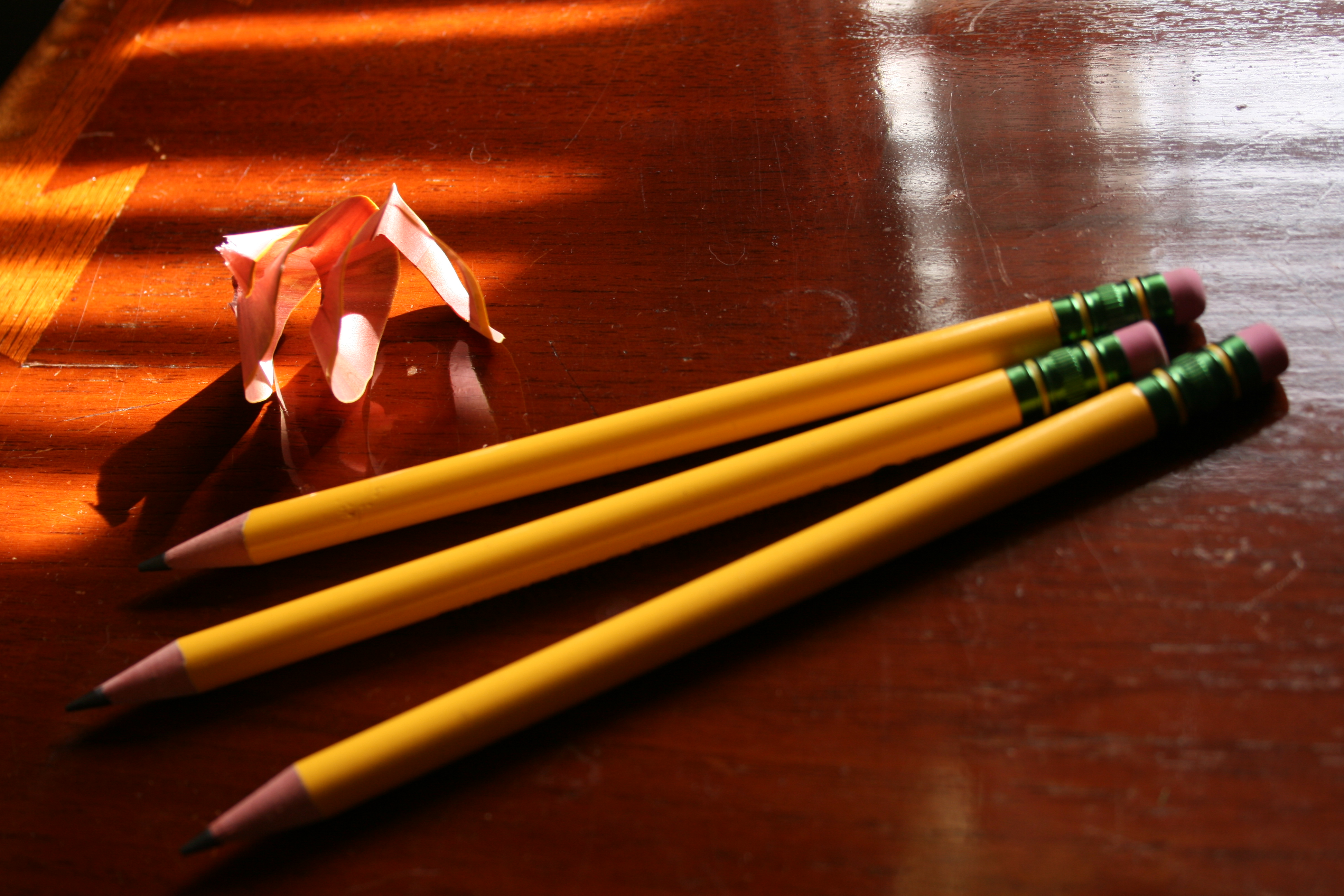
pencils
http://openphoto.net/gallery/image/view/22877

If I didn’t know otherwise, I’d think that students in this province were all under the supervision of clones of Thomas Gradgrind who saw students as empty pitchers to be filled with the right type of knowledge. If you read between the lines of the new curiculum, teachers have apparently been stuck in the “content delivery” mode and are in need of adjustment into their new role of “guide, coach and mentor” so that students’ learning can be “personalized”.

I don’t even know where to begin to unravel this fallacy and all the other false assumptions threaded through the entire project.

Let’s start with what I do as part of my job of teaching:

I research, analyze, evaluate, discern, strategize, judge, plan, learn, improvise, lead, monitor, assess, decipher, negotiate.

I synthesize, prioritize, demonstrate, create, observe, administer, calculate, arrange, construct.

I empathize, organize, engage, motivate, support.

And when I’m not doing all that, I guide, mentor and coach.

So I’m completely confused about the emphasis on how teachers need to change their roles in the classroom. What did they think we were doing all this time?

As for personalized learning, I do not know what other kind of learning there is. All learning is personal!  That’s the way we humans are wired. We are personal meaning makers,  each of us making unique sense of the world around us.

If 30 students are presented with the same information, they will all learn that information differently, personally, based on who they are, where they’ve been, and what they’ve previously learned. Teachers already know this.

I have been giving students course credits for personalized projects since I began teaching decades ago.

I once had a student who hated to read but loved doing graffiti art. To make up for much of all the work he didn’t do in class, I asked him to research the history of graffiti, to plan and present information about all kinds of graffiti and to demonstrate to the class how to do graffiti. He did an amazing job, I would have let him spend the entire semester exploring even more aspects of graffiti art. He could have studied it through geography, law, anthropology and psychology if I didn’t have to also get him ready for the mandatory Grade 10 English provincial exam.

Teachers adjust assignments and projects to better suit students’ personal needs. They invite students to personalize their learning. This is not new.

But the BC ED plan doesn’t mean personalization in this way. When the new plan mentions personalization, it actually means “technologization”.

It’s no secret that multinational corporations see lots of profit to be made in the “education sector”. And governments who see themselves as bookkeepers like the idea of not having to spend money on teachers’ salaries when students are “learning” from online courses, sitting in front of their personal computers.

To think that this was a good idea, you’d have to completely disregard all the research that reveals all the negative effects of excessive screen time on the brains and bodies of children and teens. You’d have to also ignore the fact that we are social beings, hardwired to be connected to other human beings. What kind of students will graduate from an education system that has encouraged them to “learn” in isolation of other human beings?

Whenever I take my students to our school’s computer lab, even though they each have access to their own computer, they will gather in groups around a computer so that they can discuss what they’re watching. They like to learn together.

Teachers have been embracing change and innovation long before “21st century teaching” became a buzzword.

If you don’t want to take my word for it, you could ask the superintendent of our district who wanted to learn first hand about what was happening in classrooms. He sent out a request to all teachers in the district, asking to be invited into classrooms.

During his visits, he discovered that there was lots of innovative teaching happening all around the district.  He did not come across a single Gradgrind clone. He now has a very clear idea of not only what teachers are doing to prepare students for their futures, but he also knows what teachers need for the work that they do.

A new curriculum is not on the top of that list.

I wish the people from GELP who are behind the “education reform” all over the world could visit the classrooms of even a fraction of the teachers in this province. If they did, they would see that there is no need to tell teachers that students’ learning should be personalized. There is no need to tell teachers to integrate technology into their teaching. Or that they need to prepare students for the 21st century.

They would know that teachers are already doing all this despite a dearth of resources due to massive cuts to funding.

Imagine what teachers could do if schools were funded the way they were when the current graduating class was born.

Students entering Grade 12 next week have the misfortune to have entered kindergarten soon after the formula for funding public education was changed.

They will graduate in June 2016 having spent 13 years making do with overcrowded classrooms, outdated resources, and obsolete technology. Some of them will have waited years to see a school psychologist. Many of them with learning disabilities would have gone through exhausting struggles to get to Grade 12 without any education assistant support. Many of their peers in kindergarten didn’t survive those struggles.

Where was all the  fanfare about personalized learning when they needed personal help with their learning?

Why the new curriculum reminds me of a jazz funeral

Jazz_Funeral_for_Democracy_-_Trombone

I wish I could get excited about the new curriculum from the BC Ministry of Education, I really do. I wish I could believe all the hoopla about how the new curriculum is going to prepare our students for their lives as adults in the 21st century. I really want to believe that this time the Ministry really does have our students’ future in mind.

But my mind is filled with too many images that keep popping up like gatecrashers at the new curriculum party.

Here’s one: a student with severe autism who used to have an education assistant to support him for every block of the school day but who now has an education assistant for just one block per day because budgets had to be balanced after massive cuts to school district funding.

Here’s another:  a class of 30 students, half of whom need learning support of one kind of another. How will one teacher create and monitor personalized learning assignments for all  students in this class?

And another: students who have their one meal each day at the school’s breakfast club, who do not have computers, let alone internet access at home, and who have parents who work two jobs just to keep the family fed and sheltered. What do the changes offer these students?

This new curriculum is being launched in a province that has the highest rate of childhood poverty in Canada. A province that has no plans to reduce childhood poverty. A province where a teacher’s plea for shoes for her students led to the establishment of a charity to support the needs of students in public schools.  A province in one of the richest countries in the world.

How can we talk about 21st century learning when so many of our schools could be the setting for a novel by Charles Dickens?

I wasn’t quite sure whether to laugh or to cry when I saw an example of how the new curriculum could be implemented for Grade 6 – 9 Science: “Students build a Shelter”.  Will children need these skills for when their classrooms come crashing down around them during an earthquake since seismic upgrades for public schools have been delayed for ten years?

Being a teacher public school in British Columbia can be so Kafkaesque. There are so many contradictory messages that emanate from the government, it’s hard to make sense of it all.  I am often confused by communications from the Ministry of Education. It seems that there are two different personalities that take turns being in charge at the Ministry, just like in the story of Dr Jeykll and Mr Hyde.

When the Ministry is being lead by the Mr Hyde personality, as it seemed to be during the 2014 labour dispute with teachers,  it issues edicts that cut a teacher’s daily pay by 10%, it locks teachers out of classrooms during lunch so that they are forced to have their lunch breaks on sidewalks, and it refuses to raise teachers’ wages to compensate for the rise in the cost of living.

The Mr Hyde version of the Ministry guts public education funding while it increases funding to private schools.

It is quite remorseless as it forces the education system into the “affordability zone” while completely disregarding  Supreme Court rulings and the Canadian constitution.

On the other hand, the Dr Jekyll version of the Ministry mentions the need for teachers to be supported in the work that they do. It seems to value teachers and the role they play in students’ lives. 

The Dr Jekyll personality not only talks about placing students’ needs at the centre of the learning process, but also acknowledges that doing so would require many changes that are not cost free.

So, which version of the Ministry should I expect to show up when the new school year begins?

I so want to believe that the Ministry truly acknowledges the “complexity of the teacher’s role” in the classroom. But I just can’t believe the hype until and unless the question of class size and composition is settled.

It would be wonderful if a teacher’s right to bargain her working conditions – the learning conditions of students – didn’t have to be confirmed by the Supreme Court of Canada. The fact that it has to be puts a huge damper on all the trumpets heralding the launch of the new curriculum.

I wish all the celebrations of the new curriculum didn’t remind me so much of being at a New Orleans jazz funeral, where joyful music masks a sad reality. 

That this image comes to mind is quite ominously ironic since it was in New Orleans that public education was killed and replaced by charter schools with devastating results.

Can we expect the same to happen to BC’s education system which seems to be undergoing a kind of death by a thousand (funding) cuts inflicted by the BC Liberals since 2001?

I really hate being a party pooper but I can’t unsee what I’ve seen during the past 14 years of BC Liberal governance.