Educating Hospitably

elyse drawing
Drawing by former student, Elyse H.

With the summer break nearing its end, I went in yesterday to check on my classroom. I wanted to see how much work I’d need to do to set it up before I welcome students to the first day of school in two weeks time. The floor was shiny, the board sparkling clean, an open slate awaiting the first lessons of the new school year.

The start of a school year has always been like a second New Year for me, and like traditional New Year, I make resolutions. In the past, my resolutions have focused on how to make my classroom a more comfortable place, a space where my students would want to be. At first I tried to make the space more physically comfortable, adding colour and curtains to dull, grey spaces. Over the years I’ve added couches and cushions, a micro-kitchen. I have also tried to make the classroom more psychologically comfortable by adding brain breaks during lessons: dancing, stretching, laughter yoga. Sometimes students meditate, sometimes they nap before lessons.

I have also tried to increase comfort in other ways. Right from the start of my teaching career, I’ve attempted to democratize my classroom. I often discuss the requirements for assignments with students and we regularly negotiate due dates. A few students each year meet with me to  discuss underlying issues in our classroom community. We also have a process for dealing with conflicts. But, as I discussed in Lessons Learned, despite all these gestures and my best efforts, my classroom is only sometimes a comfortable place to be for some students.

My resolution this school year is to be okay with that and to check my ego at the classroom door.  

Don’t get me wrong. This does not mean that I will stop working to make my classroom a place where students can learn, and a place where they would want to be. It does mean that decades after I first walked into a classroom to teach, I now accept that I have an impossible task: to make the education environment hospitable for all my students, all the time.

I’m sure there’s no need to list all the ways that schools can be inhospitable places for many students. Although the discomforts of students who endure homophobia and racism and bullying are well-known, perhaps less acknowledged is the discomfort of all students who have to sit for six hours each day while someone talks at them. Every year I apologize to my students for what they stoically endure in schools.

This year I will continue to make those apologies with a much clearer understanding of why they are necessary. This year, I’ll be attempting to educate my students hospitably.

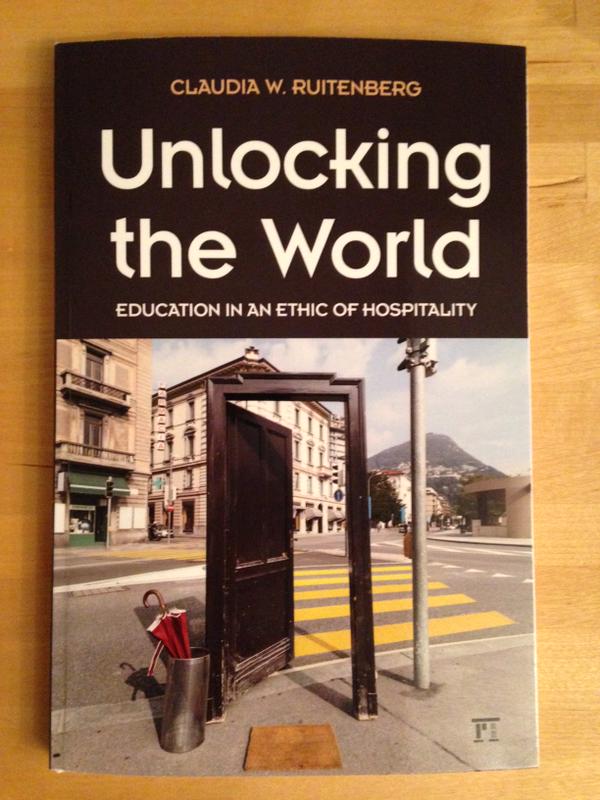
Educating students hospitably goes far beyond providing couches, cushions and cookies as I learned in Unlocking the World: Education in an Ethic of Hospitality by Claudia Ruitenberg.
unlocking the world 2

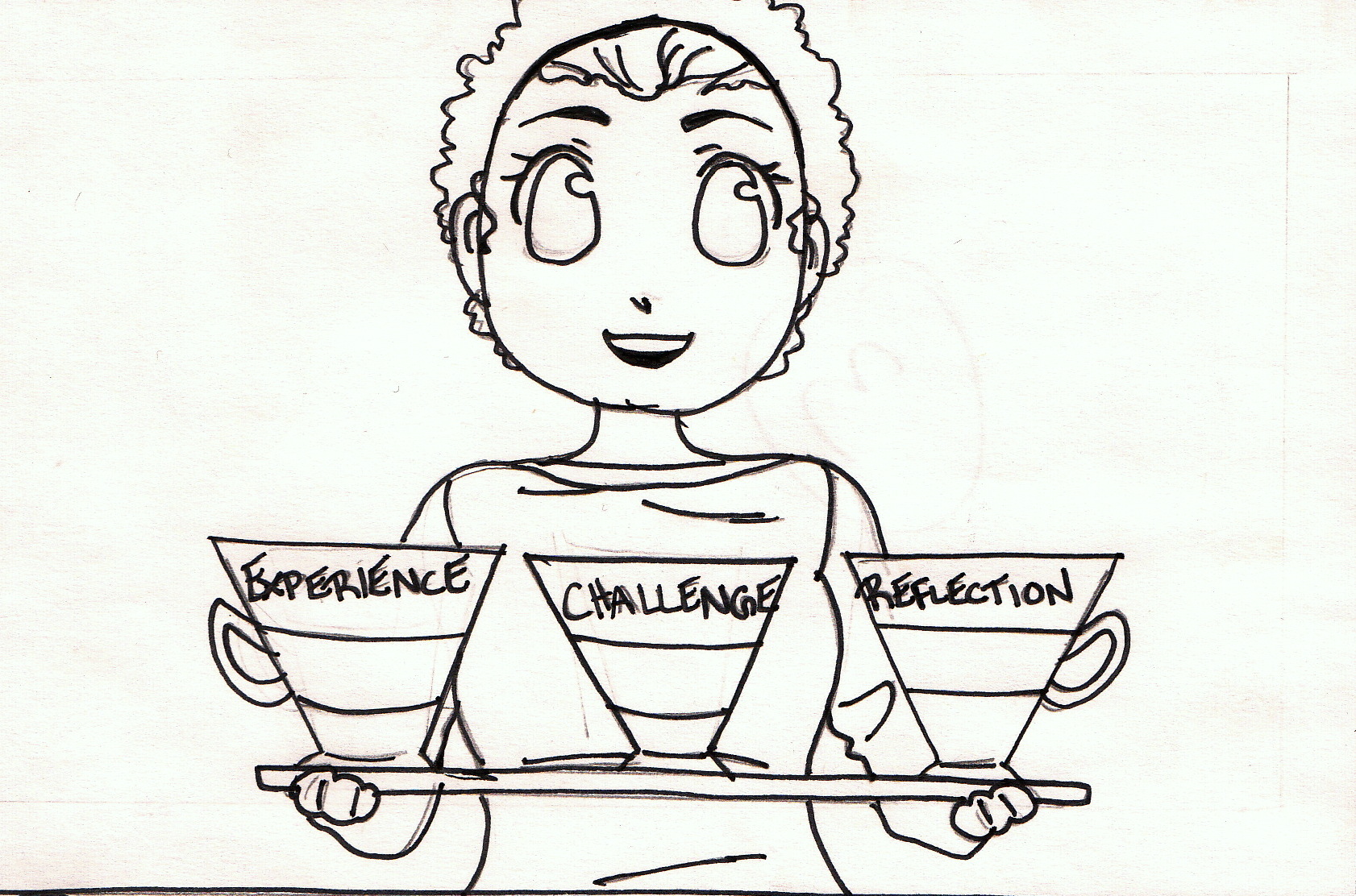
A teacher-host who educates hospitably has far more demands on her than the kind my friend Stephanie had when she hosted a house party recently. All Stephanie did to prepare for her guests was to clean her home, buy some food and send out invitations. During the party, she kept drinks refilled, replenished food platters, and circulated through conversations. Most guests said they had a marvellous time. Stephanie definitely did.

But the kind of hospitality that Ruitenberg proposes in her book requires a different kind of preparation than what teachers normally do during the summer break.

During the summers, if we’re not upgrading our qualifications, then we’re attending conferences or workshops, reading posts on educational social media and revising lesson plans. Although all this preparation takes different forms, it’s essentially focused on increasing our knowledge and know-how.

To make the shift to educating within an ethic of hospitality however, I need to interrogate my identity as a teacher.

I confess that I’ve been quite smug about being a popular teacher. I’ve revelled in being the maverick who does cool things in her classroom. I had grown so accustomed to being told how much students enjoy my classes, that it came as a complete shock this past spring when some students really disliked being in my classroom. Taking their criticism personally, I considered myself a complete failure.

I admit that when students do not get excited about the content of lessons, I take it as an affront, as though I had personally created the knowledge I was presenting.

If I’m to educate hospitably, I must accept that I do not own the knowledge I share with my students. I have inherited it from the millions of people who made discoveries throughout human history. As a teacher, I am just one of many temporary custodians of our collective cultural knowledge. My work as a teacher is to provide some of the keys to this knowledge, to “unlock the world” for my students.

I once had a student, D, who gave me a reality check years ago.  I clearly remember him saying to me: “Ms Foster, you know that point in the universe around which everything revolves? It’s not you!”

I remember bursting out laughing at this. It was the most perfect challenge to whatever puffed up position of a “great educator” I had assumed at the time. 

In checking my ego at my classroom door, I also need to expect that my students will not be as enthralled as I am about the curriculum and that they will challenge what it contains. Educating within an ethic of hospitality demands that I not only allow those challenges to occur but that I should encourage them.  After all, this is how human knowledge has advanced through the millennia – with fresh eyes looking at old truths and seeing something more, something different.
hostess_0001
Drawing by Elyse H.

As you can see, this kind of preparation involves a paradigm shift in my role in my classroom.  Although I am responsible for creating a space for my students to hopefully be comfortable and engaged in, I cannot expect that they will appreciate all that I have done to prepare for them or that they will like what I have to offer from the curriculum.

In preparing for this new school year, what I bring into my classroom is not as important as what I leave at the classroom door.

There is no place for my ego in a hospitable classroom.

Learning the Words

When I was a child, my Aunt Alma taught me how to read.  I still remember the flashcard for ‘red’ written in perfect teacher penmanship.  Of course, learning to read happened years after my toddler-self had learned how to name the things I saw and touched. Learning to speak and to read must have been exciting to my child-self, but five decades after I first learned to read,  my adult-self was thrilled to learn new words to describe what I’ve experienced in my classroom for the past two and a half decades.

For years when people asked me what I taught, my mind would go blank. Truly blank. It felt wrong to just respond with “English” or “Civics” and so I tried different words. Paradigm shifting. Personal revolution.  But even those felt not completely correct. And so I’d launch into an explanation of what I did in my classroom but I still struggled to create a clear picture of what went on there.

When I went to graduate school, I learned many new words that described what happens and what should happen in classrooms. Some of these came close to describing what I tried, or managed, or hoped to do, but none of them were a perfect fit.  In a paper about my struggle to find the words (theory) to describe what I saw and experienced in my classroom, I expressed a yearning to find words to name my experiences.

This week, I found those words.

In her book, Unlocking the World, Claudia Ruitenberg provides me not only with the words to describe what I try to do in my classroom but also offers a new lens with which I can look at past classroom experiences, differently.

Ruitenberg suggests that we can look at what teachers do in classrooms as providing a kind of hospitality. She sees teachers as hosts who unlock the world for our students (guests) when we provide the keys to knowledge. But, being a teacher-host in Ruitenberg’s sense is more complex than the commonplace understanding of the role of a host who provides cookies and comfort. Educating hospitably is an ethical task and it’s also an impossible one, with lots of room for the host to fail. ( I found this aspect of her theory especially liberating!)

According to Ruitenberg, a teacher must offer hospitality even to “bad” guests, those students who do not “appreciate” the hospitality being offered. She must expect that the student-guest will not accept the hospitality being offered and that the student-guest may respond to the classroom-home in ways that are not welcomed or expected. But the teacher-host must still offer hospitality, even if the student-guest’s arrival challenges her (the teacher’s) sense of self. It’s the ethical thing to do.

I wish I had known this when I met The Crew. I wish I had these words and terms when I first introduced The Civic Mirror into my classroom. Perhaps being able to name my experiences then would have alleviated some of my distress at the time.

As I read Unlocking the World, experiences I have had throughout my teaching career flashed through my mind and I was able to see them in a new way.

friendship day 2
Students sharing a potluck meal with a teacher.

The photograph above was taken in 1987 in Durban, South Africa during one my first attempts at trying to make an entire school a hospitable place to be, if only for a day.  I called it Friendship Day but if I could go back and change it, I’d call it A Day of Hospitality.

On Friendship Day, the normal activities of the school were suspended and everyone spent time in workshops on topics like conflict resolution and leadership during the morning.  At midday we had a communal potluck meal, with teachers, students, administrators and office staff all eating together. After the meal there was singing and dancing and drama skits, all opportunities for students to show skills that are not readily apparent in academic classrooms.

South Africa during the Apartheid-era was an inhospitable place for anyone who was not White. This inhospitablity existed in many forms everywhere but it was particularly pernicious in schools. It was through formal education that the government sought to ensure that all young people of colour would learn their “place” socially, culturally, economically, politically. I’ve written elsewhere about my response to those impositions and don’t want to revisit that here.

When I began my teaching career, I wanted to create a classroom where students would want to be. There were no examples I could follow. No language to describe what I was trying to do. Now that there is, I will look back at the road I have walked, and name what I could not before.

Friendship day 1
There are 5 teachers in this photo. Can you spot them?

Lessons Learned

camp jubilee
Camp Jubilee, Indian Arm, B.C.

“I feel like such a failure”,  I said.

“What do you mean?”  he said.

“This has been such a difficult semester. I feel like I haven’t done a good job at all.”

C looked at me with a puzzled expression on his face, his one hand still holding the bag of ice to the back of his head.  We were sitting on a dock while he recovered from having injured himself an hour before during an outdoor teambuilding activity. In the forested area further away from us, he had fallen in such a way that he cut open an inch of skin on his head. He had been bleeding and so the First Aid attendant had advised that he not continue with the day’s activities.  He didn’t seem to be too disappointed to be here, talking to me as we looked out on a scene of ocean, tree-covered mountains and blue sky.

“I don’t know what you’re talking about”, he said. “I’m having the best semester I’ve ever had in school! Everyone loves this class. There are so many things I would never have done if it weren’t for this class. I would never have spoken to A, for example. And he’s so funny! He makes me laugh!”

“But”, I said, “I haven’t used many of the tools in my toolbox. There’s so many things I normally do that we haven’t done.”

“You don’t need all those tools. You just need the one you’ve been using to get us to all to talk to each other and enjoy being together. And look at this, look where we are! Everyone loves this field trip!”

On any other day, having a student injured, bleeding, on a field trip would be a teacher’s worst nightmare, but C’s injury turned out to be a gift in disguise for my battered teaching soul. We could not have had this conversation were it not for his fall.

At that point, just weeks before the end of the school year, I felt defeated. I had been struggling all semester with an impossible class and it felt like nothing I did worked at all. I felt like I could not meet the needs of an extremely academic group of girls while I dealt with consistent disruption from a group of boys we called The Crew. (More about them later. C was not a member of The Crew.) Students engaged in feuds with other students in the class and those with learning disabilities had no education assistant support.  There had been days when I did not recognize the teacher I became under the strain.

We must have sat talking for about an hour, and all the while he told me what he appreciated about being in a class that I thought I had completely failed.

When I later reflected on what he had said, I realized that I had not so much failed as I had forgotten what I intuitively knew: teens crave connection.

Helping students to connect to and with each other and to create a classroom community is central to all that I do. It’s the focus of all activities in the first week of class, and it’s  the common handle on all the tools that I use. Having connection as the crux of my curriculum was initially a reaction to Apartheid’s forced separation at the beginning of my teaching career but, 26 years later, there is a different reason for its importance: the most technologically connected generation in history is ironically the most psychosocially disconnected.

Susan Pinker’s book, The Village Effect, cites several studies that point to the critical importance of real world, face-to-face interaction for everyone, but especially for teens who may experience “Facebook depression” even though they have thousands of “friends”. The studies paint a bleak picture of the effect of screens on the lives of teens.

I have very little technology in my classroom. I don’t have a Smartboard. I don’t want one.  There is no way that I can technologically trick my students into consistently paying attention to things that they see as irrelevant to their lives. The content of the curriculum stands no chance in competition with the drama unfolding on social media and the novelty and brain rewards that video games provide.

Many education social media sites  list suggestions for how teachers can add more technological tinsel to their lessons. It can be quite overwhelming to sift through them all, wondering whether I should “flip” my classroom or use tablets to teach storytelling. There are so many ways we can add bells and whistles to try to dress up course content in an attempt to hold students’ attention.

But, in my experience, the attention that teens want and need, the kind of attention they value and appreciate, is the kind that doesn’t require a battery or a wi fi connection.

The Crew knew this too.

The Crew 1
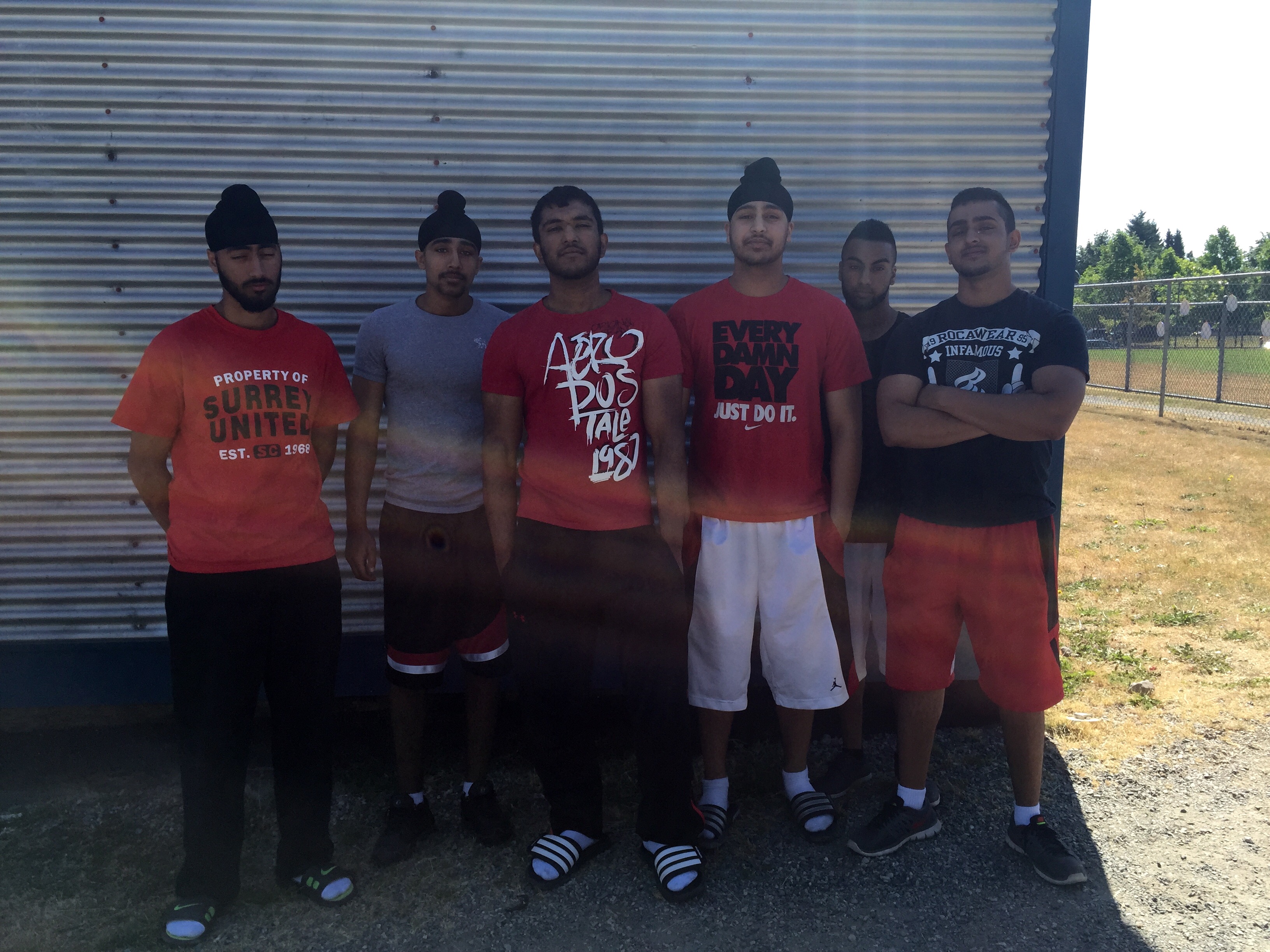
The Crew. Photo courtesy J Newman

The Crew are a group of close friends who got into my class after the shop class they really wanted was cancelled. Right from the start,  our relationship was troubled. They would not stop talking to each other during lessons. They were constantly late to class. They seemed uninterested in anything that the rest of the class was doing. Some of them were suspended from school more than once. Most of them were sent to the office multiple times. But, at the end of the semester, all of them said they had had the time of their lives.

I admit that having them in my class felt like the ultimate test of my teaching life.

After 26 years of teaching, I had slipped into a kind of complacency. I had created a successful menu of strategies and activities. My class was popular and I admit I felt a bit smug about that. But, that smugness tempted fate and along came The Crew who taught me a new lesson about connection that I did not know.

You’ll notice in this photo that they’re all dressed quite similarly, as though in uniform. This was not by design. They were surprised when we pointed it out to them. I would often tease that they behaved like the Borg from StarTrek: multiple bodies with one mind. But they were nothing like the Borg in temperament. They were kind, and generous. Very funny, and very forgiving. It didn’t matter how often they were banished, none of them ever responded in the stereotypical way a hurt or angry teen might respond.

The truth was that they tried really hard to behave but that was like asking a fish to fly. They all had high kinaesthetic intelligence and it was extremely difficult for them to sit in a classroom all day. Amongst them is a competitive wrestler, a Bhangra dancer, two bodybuilders, three competitive soccer players,  and a few artists.

Although students can leave my classroom at any time for a brain break, and The Crew frequently did, they still spent too much time being in a space that was not comfortable for them. I knew this yet felt quite helpless about doing much about it.

I felt like I was the proprietor of a successful restaurant that had seen lots of success over the years by keeping a basic menu that was tweaked regularly. And now I was faced with a group of patrons who seemed to want nothing on the menu.

But I was wrong.

Here’s what two of them said at the end of the semester about their experiences:

H: [This class] has been the most educational experience I have had. In this course I learned many new things about myself and developed skills and abilities that will forever help me in my future. This class was an unusual class.  We learned to see things in many ways and through different perspectives. Through all these experiences I learned a lot about myself and became a more responsible and independent individual. This course always made me think beyond my limitations and really expanded my mind.

J: After realizing what we were doing was bad, and had a negative impact on others, I attempted to change myself a little bit. I started to … clean my act up by considering the feelings of others. I decided that even though it was late in the semester, there was time for change. I was able to start participating in class as much as I could and I took the opportunity to become prime minister of [our Civic Mirror country]

J, the leader of The Crew, was twice elected Prime Minister of the  class’s simulated Civic Mirror country. His government was responsible for the country receiving the highest Civic Mirror ranking of all my classes over the past 8 years.

P, another member of the crew, got onto the Honour Roll for the first time, joining J who got on for the second time since Grade 8.

The entire Crew passed the provincial, standardized exam.

The Crew taught me that I didn’t need to worry about the menu. It was just fine.

C was right.

Essential Time for Education

clock
http://www.imcreator.com/free/objects-items/clock

Dear Minister of Education Peter  Fassbender,

Now that Bill 11 has become law and you have the power to determine what I do for my professional development, I wonder if you could spare a few moments to help me with some concerns I have?

What do I do if an Individual Education Plan (IEP) calls for a student to have a scribe but there are no Education Assistants assigned to that student? What should I do? Do I leave the other 29 students to their own devices while I write the student’s responses to an assignment?

When I have fifteen of thirty students in a class with IEPs that all call for different adaptations, which of those IEPs should I attend to first during each 70 minute period with the students?

Do you have any suggestions about what I should have the students without IEPs do while I set up the students with IEPs when I do not have an Education Assistant in the classroom?

And what do I do when I am lucky enough to have one Education Assistant in a class where there is a student who is autistic, a student with dysgraphia, a student with hearing difficulties, a student with severe behaviour issues and a student with ADHD who needs to constantly pace? To whom should the Education Assistant and I address our attention?

There are so many more situations I need advice on. I hope you have some suggestions.

Does your plan for my professional development include having time to analyze my lessons and discuss my observations with colleagues like teachers in Finland and Japan do?  I have noticed so many things about the way my teen students learn. I would love to have time to do more research and to find ways to adapt my teaching practice to accommodate what my students need.

I must confess that I envy teachers in Finland who are allowed to spend 40% of their time at work in analyzing lessons! I have so many questions about what happens in my classroom that I’d  love to have the time to discuss with colleagues.

As it is, the situation now is that I can snatch a few minutes with a colleague while we wait for our photocopying to finish. Sometimes we are lucky and get a few minutes during lunch if we don’t have students to meet with or department meetings to attend. We have become experts at eating while multitasking!

Having only five Pro-D days a year means that by the time the Pro-D day arrives, there’s so much more that needs to be discussed and so on those days we can only chip away at the mountain of curiosities we have about teaching and learning. Imagine having interesting things happen each hour over 180 days and then having just 5 days to discuss all that has happened.

As you know, back in the 1980s teachers gave up vacation time in order to have Pro-D days so I know that adding more Pro-D days by extending the school year will definitely not be popular! It seems to me that a much more effective approach would be for professional development to be built into each instructional day as is done elsewhere. That way there is a timely addressing of the issues, wouldn’t you agree? Children can change so much over a short period of time through their development. But, being that you’re a grandfather, I’m sure you know this.

As a mother, there’s lots that I learned about child development while my daughter was growing up. Her questions often flummoxed me! Young children can be so smart, can’t they?

Through all my undergraduate and graduate studies it was wonderful to be able put my experiences as a mother into the context of research in Psychology, Sociology and Philosophy. Nowadays I draw from my 6 years of university studies in education to make decisions about what the best approach would be to increase the chances of my students being successful. But sometimes not even my Master’s degree  is enough to deal with some of the challenges and that’s when I wish I had time to discuss possible responses with my colleagues.

When I do happen to carve out enough time to talk to a colleague, I’m always amazed how a different perspective can help me to see more clearly what is happening in my classroom. It’s as though my colleague has cleaned up my glasses so that I can see through them more clearly!

By the way, I don’t mean to be rude, but  what education qualifications will you be drawing upon when you make determinations about what I should learn in order to develop professionally? Just curious…

I really hope that when you determine what I should do for my professional development that you consider that what teachers need most are enough Education Assistants for every student with an IEP and time with colleagues to discuss ways to help our students to be successful learners in the 21st century.

Sincerely,

A. Teacher

Re/drawing the System

how to help you draw
http://www.imcreator.com/free/art-music/sketch

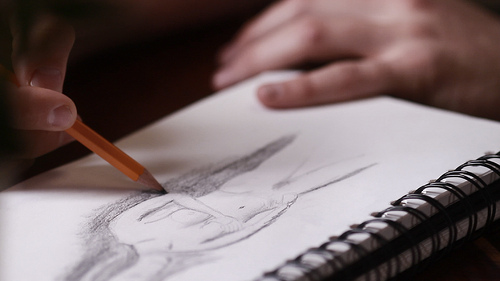
I don’t know how to help you. I know what you need but I don’t know how to get it for you. You’re an artist. You see the world through a cartoon lens. While I talk, you draw crazy creatures. You should be in an art class, all day, every day. Instead you are slotted here to study what you’re not interested in.

Next to you sits your friend who loves to dance. She skips class often, finding it unbearable to sit for long hours each day. I don’t know how to help her either. I wish I could have her submit a dance instead of an essay on what it means to be Canadian.

Every now and then I find a fissure within the restrictions of the curriculum into which I can slip assignments that allow you to creatively show what you know. But those fissures are few and far between, crowded out by what has to be done to prepare you for the mandatory government exam.

I know that you want to learn. I know you want to think about more than what’s in the textbook. I know you want to be able to create the things that roam around in your imagination.

I know you are numbed by the mediocrity of daily routines in the classroom.

I would love more than anything to be able to completely change them for you. To redraw the boundaries, or perhaps to erase them.

But it doesn’t matter how innovative I can be with what I teach, we are both still caught in a system that resists transformation. Its very structure stifles.

The San Diego zoo is the most innovative in the world, recreating natural habits for the animals, but it is still a zoo. There are still walls that restrict and confine. No matter how innovative teachers are in classrooms, for as long as you are examined and tested and age-batched, nothing has really changed.

If I could design your learning experiences, I’d have you spending time with all kinds of artists, shadowing them through their day, helping when you can. I’d have you teaching younger children what you know. I’d have you sharing what you know with other students, with parents, with your community. And every now and then I’d have you tell me what you’ve learned about yourself through all that you did so that together we could plan what you should do next.

You once asked me why teachers asked so many questions, why you had to answer so many textbook questions. I used to have an answer for that. I used to say that you needed to know the answers so that you could be an informed citizen, understanding why things are the way they are today.

But I realized that that is impossible. How are you supposed to memorize all that has happened in the past, from all the different points of view that are witness to today’s news? Your brain is simply not designed to do that. If you wanted to understand anything at all happening in the world today, there are a myriad ways you could find out. A few swipes on the device in your pocket can take you anywhere that human knowledge is.

So my answer to your question is that I don’t know why you are asked so many questions. I don’t know why teachers ask you questions whose answers they already know.

What I do know is that you’re going to have to know the stuff we adults don’t know: how to live in a world of climate change; how to have an economy that does not destroy the environment; how to make a living in a way that feeds your soul; how to find love, and how to find where you belong.

You certainly don’t belong here, sitting in classrooms for six hours each day, desperately trying to feign interest in what a teacher is saying.

Where you do belong is in a school that is more like a library, a place you would go to exchange information with others, a place of conversation and connection, a place where teachers are like midwives, supporting students to become who they are meant to be, helping them to find their place in the world.

Just as you turn those images in your mind into pictures on a page, I wish I could transform my ideas of what schools should be into reality.

I wish I could draw the way you do.

Prison Reading

prison reading
http://www.imcreator.com/free/education/iceberg-4

My heart skipped a beat when I saw your face on the front page of the newspaper, my mind racing back to the day that photo was taken at school. Your smile is so brilliant. Your eyes have that mischievous look I remember well. You would use that smile to charm yourself out of trouble so often. But that smile won’t charm the warden when you join the prison population this week.

Many within that population have something in common with you. 77% of them had learning disabilities when they were at school.

When I first met you when you entered high school, I remember how hard you struggled to pay attention in class. You could not sit still! Your body wanted to move and so I let you leave the classroom whenever you needed to. But you could not do that in all your classes in high school where paying attention means sitting still.

I remember all those drawings you made instead of writing notes. The creatures you drew were fantastical, the products of a very creative mind. But for some reason, that mind could not make sense of what you read, no matter how hard you tried.

Your learning disability had been recognized by teachers while you were in elementary school but that was at the time when the new funding formula for school districts was starting to have an impact. With cuts to the number of school psychologists, waiting lists got longer and longer. And when choices had to be made between you and a student exhibiting violent behaviour in the classroom, your suspected reading disability was seen as less urgent. After all, you were funny and kind, not violent.

You were well-loved by your friends who helped you with your school work more than they should have. But they were also charmed by that smile and all the cartoons you drew. Your skills were always in demand whenever there were group projects that demanded creativity. That was something that you could do even if you could not write an essay.

With the help of your friends and your teachers who did what they could, you struggled through each year of high school, without any support, without an Education Assistant to help you, without a Learning Support teacher, without an IEP ( Individual Education Plan) which would have helped your teachers to know how best to help you.

Your parents too were at a loss with what to do. They could not afford the costs of having you assessed by a private psychologist, the only alternative to the long waiting lists in schools. They both had minimum wage jobs and tried the best they could for you and your siblings.

You seemed changed the last time I saw you when you were in Grade 11. You were waiting to see a Vice-Principal, after being caught smoking marijuana. Your eyes had lost their sparkle, and you only smiled ruefully in response to my question about why you had been doing drugs. Later, I wondered if it was a way you found to numb your frustration.

What else was numbed in you on your journey from student to armed robber? Was it a part of you that needed nurturing while you were still at school? Would your journey have been different if you had had the support you needed to learn? Could we have prevented your role as an armed robber if we could have prevented your becoming a school drop-out?

As a prisoner, taxpayers are going to spend $117 788 on you each year.

As a high school student, you were funded at $6900 per year, $988 less than the Canadian average

During the 2014 labour dispute, the government of Christy Clark maintained that funding students to the Canadian average was outside of the affordability zone for taxpayers. Could taxpayers have been spared having to pay $117 788 each year for your housing as an inmate if your school district had been able to provide the help you needed to learn to read and to write?

It’s a pathetic irony that you’ll likely get more help for your learning disability in prison than you ever received in school. But perhaps it will be in prison that you will finally be freed from the frustration you felt whenever you tried to read and write in school.

A Week in the Life of a Public School Teacher

Teachers in countries where the privatization agenda is fully engaged, will recognize much of what happens in the week of a public school teacher in the United States.

kafkateach's avatarKafkateach

teachers-cartoon 1st grade

Monday: I don’t remember anything about Monday. I am so mentally exhausted by Friday that Monday may as well have been three years ago.

Tuesday: The only reason I remember anything about Tuesdays is because there is always a faculty meeting to remind me of how little educators’ time and opinions are valued. This Tuesday was extra special because it started with a bomb threat. There is never a dull moment (save for faculty meetings) in the life a public school teacher. In what other profession does one have to immediately drop what they’re doing and be herded into an auditorium because of an unattended box? The timing of this event was spectacular. I just started teaching the Cold War and my students were having a good laugh over an old Duck and Cover PSA video I showed them when all of sudden the school cop bursts in and…

View original post 1,451 more words

Change from the Inside

empty classroom
http://www.imcreator.com/free/education/empty-classroom-2

(This blog is a complement to  Dear Students published in Huff Post) 

What do we teachers do while we wait for politicians to agree with us that 19th century school structures are obsolete in the 21st century, and that creativity, not competition, is what we should be nurturing in students?

We change the system from within.

First, we do the work inside ourselves when we gather up our courage to release our role of  content deliverer and accept that we need to be in constant role change in our classrooms: sometimes a facilitator, sometimes a mentor, sometimes a host creating a safe space for learning to happen.

Decentering our classrooms in this way is difficult work, and is never complete. It’s not a one-day Pro-D affair. It requires vulnerability to realize that we need not be  the fount of wisdom in the front of the room.We need to be  patient but persistent with this work.

We share our decentering ideas with our colleagues so that we put the magic of combinatorial creativity to work. We remix ideas from here and there to find what will fit with our students in our classrooms. There’s a lot of trial and error involved with this. Lots of reading too.

We know that this is a Sisyphean task; sometimes that rock will roll all the way down the hill. But we have to get up and do it again. And we will, with help from our friends and allies who know why we do what we do and why it’s worth the struggle.

I was “lucky” to have been both a student and a teacher in South Africa during Apartheid because there I developed my tendency to read between the lines of any curriculum and to constantly seek ways around stifling restrictions and impositions in schools.

You may think that there is a world of difference between the education system in South Africa and in Canada, until you remember that both Canada and South Africa are former British colonies and both countries imported the same industrial model of education. Much of what I do now in Canada is a further refinement of what I did in South Africa when I became a teacher by accident. But that’s another story.

There is nothing that a teacher can do about the way a school day is divided, but there is a lot that a teacher can do when shaping each day in her classroom.  I teach the humanities to teens  in a school that has “inner-city” characteristics. We have four teaching blocks a day: two in the morning and two after a 40 min lunch.  Each block is 77 mins.

My classroom activities are dependent on which block of the day it is. Sometimes there is a lecture, sometimes an experiential activity, sometimes a check-in to see where everyone is at, sometimes a nap or meditation before any work is done. My decision of what to do when is guided by neuroscience research about how teen brains work. They do not work at full capacity first thing in the morning or during the last block of the day, so I save us all the struggle by not lecturing at those times.

I use my classroom space like a Star Trek holodeck. Sometimes it’s a laboratory, sometimes a country, sometimes a court, sometimes a parliament and sometimes a lounge where conversation happens. It is of course sometimes just a classroom!

I encourage students to ask me questions either directly, through email or anonymously through the very popular Question Box. Questions from students provide me with  insights into their concerns and what I’m missing in my teaching. A colleague who teaches Math adopted and adapted this idea, but her box is called the Panic box – where students place “panic button” questions about course content.

I do very little lecturing and try as much as possible to convert the curriculum in a way that allows my students to engage in Problem-Based Learning and Experiential Learning. When I first started doing this, I didn’t know that that was what it was called! Often times I “make the road while walking”, trying to find ways to bring meaningful learning experiences to my students.

In my dreams, I see Problem-Based Learning and Experiential Learning as the foundation of what is done in public schools in the future.

And I do hope, despite the concerted campaign to defund public education, that we manage to hold on to public schools. They are still critically important, despite their many flaws.

Public schools are much more than places where accredited learning happens. They are a safe space for students whose home lives are difficult; they are the oasis in dangerous neighbourhoods; they are where many students eat their only meal each day and where they can speak to an adult about their fears and concerns.

Public schools are some of the few public spaces we have left that still function as a commons, a space for people, not for profit.

Where else but in a public school can a teen who gets a $30 000 car for his 16th birthday sit next to one who eats only three meals a week?

With so many of our common spaces being taken over by corporations, a public school is a vital social space for many students. It is still the great societal leveller where students from diverse backgrounds can meet on common ground.

The education system has to change, it’s true, but let’s work to repurpose it. Let’s not throw the cup out with the cold coffee.

Let’s change the system from the inside out.

Can Teachers Save Civilization?

Road

(An updated version of this post is published by Huffington Post BC)

[T]he task is to articulate…an alternative worldview to rival the one at the heart of the ecological crisis – embedded in interdependence rather than hyper-individualism, reciprocity rather than dominance, and cooperation rather than hierarchy. …Because in the hot and stormy future we have already made inevitable through our past emissions, an unshakeable belief in the equal rights of all people and a capacity for deep compassion will be the only things standing between civilization and barbarism. (This Changes Everything, page 462)

Naomi Klein may not have had our public education system in mind when she made this call to action in the final chapter of her book This Changes Everything  but let’s consider the possibility that our public schools could provide a place for the exploration and practice of an an alternative worldview, one that could save civilization.

What if, to prepare our children for the complete restructuring of our political, economic and social systems necessitated by the climate change crisis, the dominant paradigm in schools was not competition for grades but instead collaboration to solve real problems?

What if, instead of preparing students to be careerists and consumers in an extractivist economy, schools focused instead on preparing our children to be global citizens, aware of how their choices and actions impacted the lives of all other global citizens?

What if, instead of teaching our children the traditional literacies – reading, writing, numeracy – we also taught them ecological literacy, social literacy and emotional literacy, and other ways of “reading the world“?

And what if we did all this within the framework of ubuntu, the African philosophy that suggests that I am because we are, that my ongoing existence depends on the existence of others?

Could adopting the  ubuntu worldview save us from  the slide toward a state of barbarism that will inevitably exist should the climate change predictions of the Pentagon and the Intergovernmental Committee on Climate Change (IPCC) be allowed to come to fruition?

Imagine a school where students are competent not only in reading, writing and arithmetic, but are also able to “read” the land around the school, noticing when there are changes in the natural environment and what those changes mean.

Imagine schools where diverse groups of students, guided by teacher-mentors, worked collaboratively on projects that solved actual problems, gaining valuable experiences while doing meaningful work.

Imagine schools where project-based learning and place-based education were not the exceptions that they are now but instead were part of a seamless connection between classrooms and the communities surrounding schools.

These innovative teaching practices are just a few of many that teachers have developed while simultaneously having to contend with multiple challenges in public schools brought about by a neoconservatist assault on public education everywhere.

Teachers are always keenly aware that they are midwives for their students’ futures. Now, more than ever, they need to be supported in the work that they do to prepare students for a chaotic and challenging future.

Instead of defunding public schools and bashing teachers, wise politicians, guided by an enlightened public,  should realize that teachers, not corporations,  are critically important to our future.

There is no economy without an environment.

Our children’s future lives depend first on there being a livable environment. In contrast, corporate profits depend on the denuding of our land, the pollution of our water and of our air.

The kind of world we will all live in by the time our kindergarteners graduate will depend on who and what we as a society choose to support on the road to the future.

The choice we collectively make will change everything.

We Are All Connected…

http:::www.imcreator.com:free:nature:sunrise-3

 Anyone who spends time with children or teens knows that they sometimes say the most profound things, perhaps without actually meaning to. It’s as though their eyes can see the world in ways no longer possible for those of us who have fully conformed to conventional ways of thinking, those of us who no longer see the ordinary magic that surrounds us.

Each year I am reminded of this ordinary magic when I take my students on a three-day camping field trip. Even though it’s the most exhausting and stressful thing I do – imagine being responsible for 30 teens for 72 hours – I know that their experiences at camp will be what they remember for the rest of their lives. They come back to school each year to tell me so.

There is nothing extraordinary about the camping field trip. They canoe, complete a high ropes course and engage in various teamwork challenges. But it’s what happens to them in between these activities that they remember most of all.

In teenspeak it’s called bonding. And, as in all words that teens repurpose, its meaning goes beyond what may conventionally come to mind, of two or more things being fused together.

When I first heard the term I had to ask a lot of questions before I fully understood what it meant. Teens don’t always articulate clearly the full meaning of what they’re trying to express.

Bonding, I learned, is what happens when they stay up all night (despite my best efforts to discourage this)  talking to each other. The topics of these talks range from the silly to the sublime but no matter where they begin, they end in a deeper understanding of each other. They get to this place of understanding when they learn how much they have in common with each other; how so many of them have similar struggles, the same concerns and worries. They learn that they’re more alike than not, that their families and circumstances are similar despite cultural divides.  It’s this deep understanding of each other that leads them to experience what they call bonding.

Scientists would have a different way of describing these “bonds”, the ties that bind us to each other.

Neil deGrasse Tyson says it’s the most astounding fact – that we are all not only “bonded” to each other but indeed that we are “bonded” to the whole universe:

“Recognize that the very molecules that make up your body, the atoms that construct the molecules, are traceable to the crucibles that were once the centers of high mass stars that exploded their chemically rich guts into the galaxy, enriching pristine gas clouds with the chemistry of life. So that we are all connected to each other biologically, to the earth chemically and to the rest of the universe atomically. That’s kinda cool! That makes me smile and I actually feel quite large at the end of that. It’s not that we are better than the universe, we are part of the universe. We are in the universe and the universe is in us.”

Christmas is a perfect time to consider this most astounding fact about our existence.

Consider that our biological connection to each other extends far beyond the family with whom we share the Christmas meal. It can be traced all the way back, through thousands of generations, to our first home in Africa. The food we eat during this time of feasting connects us to the earth chemically and those chemicals themselves are the result of the atoms spewed by stars into the universe.

Science has long provided the evidence for this most astounding fact. Why then do we live each day oblivious of it?

If we walked through our days acting on this fact, we would not still be engaged in debates about whether we should protect our environment or not. Engaging in such debates is akin to wondering whether we should protect our bodies from the cold or whether we should breathe air free of smoke.

If the education of our children was based on this fact, we would radically change what we call school and would do all that we could to prepare our children to survive through the age of climate change.

If we shaped our economic activities based on this fact, any action that could lead to the poisoning of waterways, the pollution of airsheds and the extinction of species would not only be rejected but not conceived of in the first place.

If our individual and collective decisions, whether political, social or economic were based on this fact, we would be living in a far different world, one where consumption was not cancerous,  one without poverty or pollution, one where peace was more than a pipe dream.

We would be living in the kind of world we wish for each other in the greeting cards we exchange at this time of year.

At this time of celebration of family and of joyful feasting, I hope we will pause to consider this most astounding fact and that we then resolve to act on it in the new year.