Can you see the big picture?

Dear Journalists,
Two years ago we asked for help to unravel the connections we uncovered between multinational technology corporations and our B.C. government. We hoped that an investigative journalist could dig below the surface of the story of education in BC and help us to connect the dots.

Because we believe that public school classrooms are no place for the promotion of the private profits of corporations, for a long time we have been vocal in our resistance to the creep of corporations into our schools. Now we are soliciting your help because it seems that corporations have an ally in their quest: the B.C. Ministry of Education.

The Ministry’s sudden promotion of coding in schools took us by surprise. We could not understand why or how coding zipped up the priority list of what is needed in schools ahead of seismic upgrades and repairs to leaky roofs. We had not seen it mentioned anywhere in the roll-out of BC’s new curriculum documents. And we tried hard to understand how we could teach coding without computers even while we were assured by the Minister that we didn’t need computers for the task.

But our confusion has recently ended. We now see that computer coding is the key that will provide an open door for corporations to enter public school classrooms and access what they see as a most valuable commodity: our students, their future consumers.  

school-privatization-cartoon1

Not only will our 500 000 public school students provide a motherlode of information for marketers through the data-mining of their online behaviours, but the sale of necessary technology to school districts will provide corporations with billions of public funds.

A big slice of that $5.5 trillion pie.

Take a look at the following “dots” and see if you come up with the same picture that we do:

The Learning Partnership has multiple corporate partners/funders:

All of these groups joined previous Minister of Education Fassbender at the Wosk Forum on K-12 Education in January 2015.

Can you see why alarms are ringing for teachers and for parents when we notice so many corporate links to our public classrooms?

What we see is a pattern emerging that looks very familiar. It’s a pattern we’ve seen unfold in other countries where the project to  privatize public education is more advanced.

We have also seen multiple examples of the failure of Milton Friedman’s injunction to ignore the pedagogical and democratic ideals of public education in the pursuit of private profit siphoned from the public purse.

We hope that you in the media will prove us wrong, that you will show us that our public education system will not go down the same path to privatization as the deteriorating public education systems in the United Kingdom, Australia and the United States.

Please investigate these links so that you can assure us that our children’s future is not being sold to the highest corporate bidder.

Respectfully,

Public School Teachers

(This post is the result of  a collaboration with fellow teacher, Bruce McCloy,  who provided most of the research.)

Dropping the Ball

I always know when I’ve dropped one of the gajillion juggling balls that is my teaching job. It’s when my students’ faces have the kind of look a puppy has when it’s being blamed for something it didn’t do. They look at me all wide-eyed and wondering what just happened as they listen to me express frustration.

This frustration always happens when I temporarily forget what I know about what my students need. One time, at a moment when I was exhausted and distressed, I forgot that lecturing after 1:00pm is an utter waste of time, completely out of sync with students’ circadian rhythms.

At the time, I was so caught up in my determination to move forward on a project, that I completely ignored the signs that it was not a good time to do so.  But when I noticed those puppy-eyed looks, in the midst of my complaints about their inattention, I realized that something was wrong, and so I asked.

They reminded me that I was expecting them to focus on listening at a time when they’d normally be napping. I had forgotten that the schedule for that day had been moved forward an hour and that on any other day, they’d be on their yoga mats, listening to a recording of the sound of rain, while focusing on their breathing.

And, once again, embarrassed, I apologized.

Splotched on the tapestry that is my relationship with my students, are apologies of all kinds. Regrets for lapses in judgement, feelings of remorse for slips of anger, anguish over my inability to keep all those gajillion balls floating in sequence throughout my teaching day.

I wish I didn’t have those splotches. I wish I could always be mindful of what I say and do in my classroom. I wish I could always be attuned to my students’ energy.

But I know that would take superhuman effort of which I’m incapable.

dropping-the-ball

What I am capable of is being aware of when I mess up, and then gathering the courage to clean up.

I clean up by apologizing, of course, and then by taking inventory of what I did and didn’t do leading up to the point when the balls were dropped.

Usually there’s a missed yoga class, a missed meditation session, many missed walks, and a long list of things to do on my desk.

As a teacher, I know that I’m never going to get to zero on my to-do list but I can certainly move up from zero on my well-being list.

I love that well-being is getting lots of buzz lately now that education reform has taken a turn away from standardization and toward the critical importance of emotions and relationships in learning.

We teachers have always known this but it’s nice to have the powers-that-be elevate its importance to being a core competency in the new curriculum.

I just wish the Ministry would realize that expecting teachers to be effective models for personal and social competency while we are experiencing stress due to the effects of 15 years of deep cuts to education funding, and while we are reeling from the turmoil of a massive system change, is asking for too much.

You would think the Ministry would know that, given the fact that personal and social competency is just another way of talking about relationships, it would be motivated to change its relationship with teachers.

It would be nice to have a healthier relationship with our government, a relationship in which there was a demonstration of respect for our professional expertise.

Instead, we teachers are not only regularly maligned in the media, but we also have gone to the Supreme Court of Canada to defend our constitutional rights.

What we have here in British Columbia is the ironic situation of a government rolling out a new curriculum that situates social and emotional well-being at the centre of learning while it simultaneously undermines teachers and underfunds public education.

I bet there’d be barely any dropped balls in my classroom if I had the kind of support and respect that teachers in Finland and other countries have. This is not to say that I don’t accept the responsibility to take care of myself so that I am prepared to take care of my students.

It’s just that the BC Liberals certainly don’t make that task any easier.

Having dropped the ball on public education in 2002, there is no indication that they have any intention of ever picking it up again, funding-by-photo-op in an election year notwithstanding.  

Now, if you’ll excuse me, I’m about to ignore that pile of marking on my desk while I take myself for a well-being walk on this beautiful Sunday.

What Politicians Teach

Did you catch the question from a teacher at the start of the second U. S. presidential debate?

The last presidential debate could’ve been rated as MA – mature audiences – per TV parental guidelines. Knowing that educators are tying the presidential debates to student’s homework, do you feel you are modelling appropriate and positive behaviour for today’s youth?

Trust a teacher to pack an entire lesson into just one question. The lesson topic: the role of politicians in our children’s lives. The big idea: politicians are teachers too.

Politicians teach our children what power can do. They teach our youth what kind of behaviour is actually rewarded in society.

When Trumpism, the Americanized version of Fascism, has millions of adults displaying all the behaviours we teach students to avoid, what is a teacher to do?

When our 24-hour media cycle continues to focus its full attention on loutish, boorish behaviour, what impact can lessons that last 60 minutes have?

Like many teachers, I am often overwhelmed by the expectations that classrooms be wombs for the genesis of a world rid of all social ills.

But while we teach tolerance and empathy in our classrooms, bullying and bigotry dominate media daily.

While we encourage civic responsibility and promote human rights in our schools, racism and prejudice is on full display at massive political rallies.

http://www.democraticunderground.com/10027447970

It’s hard not to sink into utter despair.

I scour the media daily for signs that the cult of Trump will be exposed for what it is – the marketing of a myth, the selling of snake oil. But there is no indication the end will come any time soon.

Now that crude and callous behaviour has been accorded relevance, it will take more than Trump’s defeat to end the Trump effect (the increase in racist bullying schools).

It will certainly take more than what is possible in our underfunded, overcrowded schools despite teachers’ best intentions.

It will take politicians seeing Patrice Brock’s question as a call to model the kind of behaviour worth emulating.

And it will be up to every ethical adult, not just teachers, to remind politicians of the responsibility of their power.

We teachers will continue to teach lessons about a different kind of power, the kind of power that pushes back the darkness: the kind that fuelled the civil rights movement, the kind of power that put a black man into a White House built by slaves.

It will take the harnessing this force more powerful, to turn Trumpism into a disgraced footnote in the textbooks of tomorrow.

Spare us the hyperbole about flexibility

British Columbia’s curriculum is being modernized to respond to [a] demanding world. To develop new models, the Ministry consulted with education experts both locally and internationally. They agree that to prepare students for the future, the curriculum must be student-centred and flexible …

One time I wished I had playdough in my classroom. Another time, a whole bunch of Lego blocks. Last week, I wished I had sunglasses with pink lenses for all my students.

Wishes like these arise whenever I see my high school students struggling to grasp a concept I had not anticipated they would not understand. Because there is no way of predicting what students know about any topic, no way of knowing how they will respond to any activity, and no way of knowing where a lesson will go once it starts, teachers have always needed to be flexible, ready to respond to whatever is in the classroom at any given moment.

You would think that the BC Ministry of Education would know this: despite detailed lesson plans, no lesson goes as planned.

Teaching is nothing if not an exercise in flexibility.

The playdough would have been handy for my lesson on the writing process. I could have used the Lego blocks to demonstrate how to structure sentences. Having sunglasses with different coloured lenses would have been useful to show how culture shades a worldview.

A teacher’s day is filled with teachable moments, unpredictable situations that arise as surprises during lessons. Skilled teachers use these the way an aikido master would, deflecting the distraction and transforming it into a lesson.

More often than not, the deflection would have been easier if teachers had access to resources not usually found on approved lists.

While millions of dollars are locked in textbook inventories that are increasingly removed from learning needs, teachers spend weekends at garage sales and dollar stores buying resources that are more responsive to the alchemy of teaching. I’m still on the lookout for Lego blocks.

lego-blocks

It would be great if I could include them on a request for classroom supplies now that teachers have been invited to tell the powers-that-be what they need in order to create “flexible learning environments” during this time of transformation to the new curriculum.

Aside from playdough, Lego blocks, and pink sunglasses, my wish list:

I’d like a pause in the school year two weeks after it has begun. Since the beginning of this school year, I’ve learned a lot about my current students and now I need time to recalibrate the lessons I planned over the summer to better meet their needs in the absence of psychological assessments and education assistants.

I’d like the legal boundaries of my classroom to extend at least three kilometers beyond the walls so that taking my students to the park to experience a concept that they’re struggling to grasp does not require three weeks notice and a pile of paperwork.

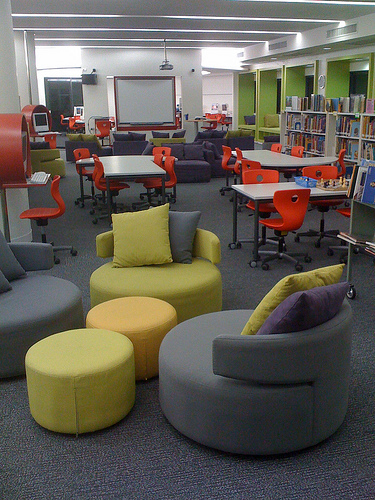
I’d like classroom furniture that is flexible, that can be easily moved and that can provide a variety of seating.

http://kimcofino.com/blog/2009/05/17/something-different/

And I want the restoration of classroom size and composition legislation.

I would be capable of multiple feats of flexibility if I had a class of 15 students with education assistants for all who needed support for learning.

It’s disingenuous for the BC Liberal government to couch its new curriculum within a framework of flexibility while simultaneously removing billions from the education budget thereby causing ever more restrictions on what is possible in classrooms.

It’s especially galling that the Minister does not acknowledge that teachers have been transforming education for decades, continuously responding to “the demands of a changing world” without much support for this Herculean task from the Ministry.

So it’s nice to finally be given official permission to do what we’ve always done – adjust the curriculum to suit the needs of our students – but unless there are dollars on the table to support all the rhetoric about change, please spare us the hyperbole about flexibility.

What should be included in Back to School Supplies?

back to school supplies

What kinds of conversations have you been hearing about back to school supplies lately? The angry ones where parents fume at teachers for demanding so much? Or the sad ones where parents living in poverty are trying to figure out what to cut from the household budget in order to buy a new pair of shoes for a child? Or have you heard those heartwarming stories of strangers approaching teachers in stores and offering to pay for all the classroom supplies that teachers are purchasing out of their own pockets?  

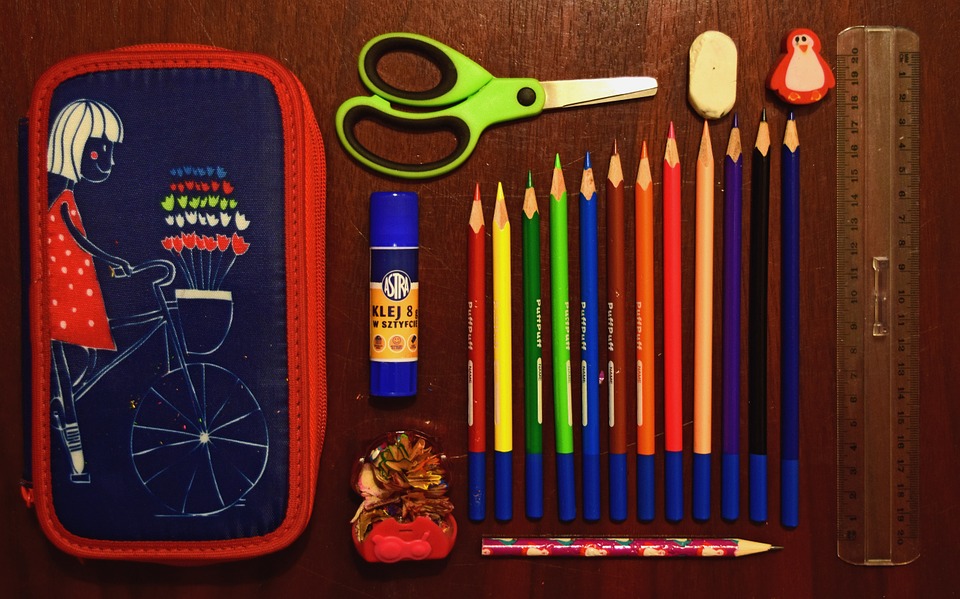
You must have noticed how these lists have been getting longer each year. You recall that thirty years ago, school supply lists were quite short, perhaps just two items: pencil crayons and a geometry set. But, for a number of years now,  the lists have become very long and often include two types of paper: photocopying and toilet.

How did we get to this point?

Increasingly longer school supply lists are now the norm everywhere public education is undergoing “reform”  but here in BC we can trace the pathway back to 2002 when the newly-elected BC Liberals changed the formula for funding schools. In essence this meant that they would no longer fund resources that previous governments had funded. And so, for the past 15 years, as costs have increased,  school districts have had to do more with less. They have long been cutting “low hanging fruit” and have reached a point where there is nothing more to cut. Now, parent-taxpayers, along with annually contributing to taxes earmarked for schools, have to make additional contributions to education resources.   

This is much easier for some parents to do than others.  For parents living in poverty, it is quite a hardship. With BC having the highest rate of childhood poverty in Canada, there are thousands of parents right now wondering which essential item in their household budget to do without so that their child will have shoes, clothing and supplies for school.

Whilst providing the basics may not be a difficulty for other parents, there are a different set of concerns that keep them awake at night: worrying about whether their children’s health and safety is assured while they’re at school.  15 years of cuts to education funding means that there are many public schools where parents are wondering about whether  to include the following on their shopping list for school supplies:

  1. A water testing kit to check if their child’s school is one of the 92% likely to have lead in drinking water
  2. A hazmat suit to protect against asbestos contamination
  3. Reflective vests for long walks to school in the absence of schools buses or public transport
  4. A mask to protect against breathing in mould spores
  5. Mice/Rat traps (humane ones)
  6. Buckets to catch water falling through leaky roofs
  7. Personal fans/heaters to keep cool/warm in schools with aging heating/cooling systems
  8. A Safety whistle to blow after earthquake so that recovery crews can locate survivors

Including these items on a school supplies list will add several hundred dollars to the average cost of $108 per child per year that parents spend. And that spending would be in addition to the $150 per child per year that parents are contributing to fundraisers.

Given that our Premier has already begun campaigning for re-election in 2017, perhaps conversations about school supply lists should be expanded to a province-wide conversation about how our public education system is funded.

How is it possible to have a “strong economy” when our schools are in such a state?

Whose tomorrow can be secure when our children have to contend with dilapidated buildings, overcrowded classrooms and a lack of support for their learning needs?

While considering who to vote for in May 2017, can we have a conversation about the value of public education to the citizens of BC?

Building Community With Attendance Questions

My blog published on Edutopia today…

iStock.com/monkeybusinessimages

Taking attendance shows which students are physically present, but asking an attendance question stretches students’ minds toward actively learning as part of a classroom community.

Source: Building Community With Attendance Questions

What to Teach in Times like These?

https://pixabay.com/en/hands-heart-love-bright-sun-697064/

I’ve been turning off the radio whenever the news comes on, having exhausted my capacity to consume any more details about the latest atrocity, whether it’s a 5-year-old girl being murdered along with her mother in Calgary, or a huge truck crushing people celebrating Bastille Day in Nice. I don’t even want to know what’s happening in Turkey, and I absolutely do not want to think about TrumPence in the US.  Yes, I am being selfish, trying to protect my heart from any more hurt and horror.

But I know that, as a teacher of teens, I can only have a temporary reprieve. Before September, I need to find some way of explaining it all.

And how in the world do I do that?

In our schools we offer students tidy packages of information in textbooks. The four reasons for WWII, the ‘correct’ interpretation of novels and Shakespearean plays.

In their exams they’re asked to regurgitate that information, with the highest awards going to those students who tell us exactly what we told them. We reward them for telling us what we already know: the answers to the questions in textbooks and tests.

But teenagers begin to realize that the answers they’ve been given do not explain the world as it is, and that realization leads to many questions, the kind that find their way into the Question Box in my classroom.

Although students can place anonymous questions about anything and everything into the box, the most common topic is conflict, from the personal to the political. They want to understand conflicts with parents, with siblings, and with friends. They also want to understand why humans resort to violence and aggression so frequently when there is conflict.

Essentially, my students want to know why it’s so hard for people to get along with other people.

In the past I’ve explained the psychological, sociological, cultural, political and evolutionary basis for human behaviour but, given recent events, I no longer believe that that’s enough.

Unlocking the World

As a teacher-host, tasked with what Claudia Ruitenberg calls “unlocking the world” for my students,  I feel as though they’ve been invited to a home that has been trashed by earlier guests. They have newly arrived in the world and are eager to learn about it, but what do I offer as explanation for the mayhem they see on their screens?

What does one teach in times like these?

A few months ago, after we’d had discussions on all the questions in the box,  one of my students asked: What are you adults not telling us?

The question stumped me. I had no answer then, but I think I do now:

We adults appear to be in charge, to be in control of what happens in the world, but we’re not.  We know the solutions to many social and political problems, but we don’t always act on them. And the reason we don’t is because we lack the courage to do so.

Courage

Courage is not something that students can learn about from textbooks. It’s not something that can be tested in exams. There are no cheat sheets or Spark notes for it.

Knowing how to solve a quadratic equation will not help to bridge the divide between the descendants of slave owners and the descendants of slaves.

Knowing how to parse a sentence will not help to tell the story you are too afraid to tell.

Knowing the causes of The Great War will not help you to act when you see someone being bullied.

Only courage can help you to do all these.

Teaching courage takes courage, I’ve discovered. The old adage that children learn more from what you do than what you say, is certainly true. Students will only believe what I say about courage if I can show them what it means to be courageous in the way that Brené Brown explains:

Courage is a heart word. The root of the word courage is cor – the Latin word for heart. In one of its earliest forms, the word courage meant “To speak one’s mind by telling all one’s heart.” 

Anger

I speak from my heart often in my classroom. Ironically, it’s usually after I have been angry and am using the situation to teach students about anger. My students learn that anger is a secondary emotion that acts as a cover for hurt or fear or pain. They also learn that it takes courage to express those primary emotions instead.

I know that one of the best places to teach and to learn courage is in classrooms. Our public school classrooms, where students of diverse backgrounds and experiences meet on common ground, are a perfect place to discover what it means to be courageous.

Over the years students have shown me in many ways what courage looks like. Here’s just one example of many stories :

When I came to this class and saw my enemy N, I was so angry. We had been enemies since elementary school. I wanted to switch out of the class because I couldn’t stand looking at her miserable, lying face. So, H and I decided to sit at a different table from N. But the teacher moved us all into our Myers-Briggs personality groups and guess who was in my group? N!  I wondered how she could possibly share the same personality traits as me.  I talked to my other classmates in my group and ignored her.

The second day N asked me how to do an assignment. I was so close to walking away but I answered her and she thanked me! I was really surprised that after all the fights and arguments she had the nerve to ask me a question. After that day everything changed. Soon  we all got together to prepare a skit and everybody got along fine, including me and N. A month into the course N and I were talking like we were best friends, I don’t know if I changed or if she changed but we never brought up the rumour or fights again.

It took the kind of courage that Brené Brown talks about for M to see N as she really was, and to work with her.  How different would the world be if more adults could do the same? 

As I prepare to host a new group of students in September, I’ll listen to the news differently, keeping an ear open for demonstrations of heart-based courage so that I can show my students an alternative view of the world.

And I hope that showing them these examples will encourage them to have courage as they explore the world beyond the answers in their textbooks and the chaos on their screens.

Check her record before you spin us a new one

http://www.truthliesdeceptioncoverups.info/2013/05/spotting-spin-some-tricks-of-trade.html

This is a message for Premier Christy Clark’s spin doctors

We understand that you have a difficult task. Your client’s approval rating is at 31%, the third lowest amongst premiers in Canada. Her government is scandal-ridden. It’s going to be quite the battle to convince voters to give her another chance in May 2017.

But if you’re going to have any hope of success, our advice to you is to check her record before you roll out your next marketing ploy.

The “almost abused” story idea was brilliant in that it targeted a section of the electorate who are very vocal in their disapproval of your client: women who are parents and who are very active on social media.  Facebook Moms your industry calls us.

Because all women live with a constant fear of being attacked and could relate to a story about an attack, this was definitely a deft move. You knew that most people would miss the part of the story that revealed that there was no actual sex involved in the attack other than that the attacker was male.

We noticed this little detail because we remember a time during the teachers’ strike in 2014 when your client went on television to tell parents who had children in public schools that teachers were demanding unlimited massages in their negotiations with her government.

It turned out that that was not true.

When you prepped your client for that broadcast in 2014, the detail you missed was that she had already agreed with the nurses union about the benefits of massages. It was not what teachers had asked for; it was not what teachers were fighting for.

This boldfaced misrepresentation of the truth caught our attention not only because massages are one of our favourite gifts on Mothers’ Day, but because it was the first time we had a clear example of how convincingly your client can tell us that white is black.

We had missed her government’s shell game in 2002 when the massive cuts to education funding began, when they started telling us that they were providing more funding when it was actually less.

At the time we were too busy to notice the slick sleight of hand.  As you marketers know, we Facebook Moms juggle many jobs.

So when our children’s school supply lists got longer and longer, and the occasional fundraisers became more regular, we didn’t pay much attention, attributing that to changes in classroom activities.

But during the 2014 strike we had a very rude awakening. We learned that teachers had been spending a lot of their own money on classroom supplies. We learned that many students with special needs were not getting the support they needed. We learned about three-year waiting lists for psychological assessments. About libraries without librarians. About leaky roofs, mould, rats and asbestos at the schools our children attended.

We channelled our anger into action. We wrote letters to our MLAs, we signed petitions, we camped outside MLA’s offices, we protested in front of the Legislature, we begged your client to fully fund public education.

In response we got scripted speeches and a lot of bafflegab about billions of dollars. We were assured that our children were attending one of the best public education systems in the world.

We didn’t believe your client and her minions.

We believed what we saw with our own eyes in our children’s schools.

And so we organized ourselves.

We formed FACE.

We formed PAN, and PPEN.

We began to do our own research and recorded what we found.

When we uncovered the truth about public education funding, we began to demand answers. We made a lot of noise, loud enough for your client to begin to dribble out crumbs of funding through highly publicized media events.

We remained unimpressed.

Your client’s favourability was not increasing.

You had to do something to change that because there is less than a year before the next election.

And so, while massive media attention is being focused on sexual violence against women, you thought that your client could ride that wave of awareness with a story of her own.

But, before you advised her to make her story public, you should have checked her record.

If you had, you would have known that when she was Deputy Premier, her government cancelled all core funding to women’s services in the province. Cancelled it.

You would have known that when her government gutted Legal Aid funding it disproportionally affected women who were seeking justice in the courts.

You would have known that these two actions have resulted in thousands of women, who have actually (not almost)  experienced sexual violence, not having any access to counselling support or to justice.

On the day that your client made her disclosure, just one of the organizations that rely on fundraising and donations in their work to support women, had a waiting list of 200 women who needed counselling for the trauma that they had experienced. With only a skeleton staff, it will take WAVAW years before they can get through that list.

We know that there are thousands more women waiting.

To our astonishment, when the facts about the decimation of supports for women were revealed in responses to your client’s disclosure, she maintained that funding was not the issue, that it was more important that the “culture” be changed.

Did she mean the culture she was perpetuating by shaming women about what they wore?

Perhaps the culture that needs to be changed is one where a politician uses any means necessary to manipulate voters through media spin.

Before you organize your client’s next smoke and mirrors show, know this: while we Facebook Moms fight for the full restoration of public education funding, your client has now made us more fully aware of where else our focus should be.

Not exactly the result that you wanted, is it?

So, take our advice: check your client’s record before you spin us a new one.

2016 is Nineteen Eighty-Four

1984 quote

In the novel Nineteen Eighty-Four, the government of Oceania has an entire Ministry that uses all forms of media to create a false reality. One of the tasks of the Ministry of Truth is to develop a new language called Newspeak which is meant to make thoughtcrime (thinking critically) impossible. The objective is to  significantly reduce the number of words in the English language so that there would be no words for thoughts that were deemed a crime, that is, thoughts that question the government’s version of the truth.

In British Columbia today, the Government Communications and Public Engagement office has a budget of $37 900 000 to ensure that you have the correct view of what the B.C. Liberals do for you with your money.

Thanks to the work of this office, during the B.C. teachers’ strike in 2014, we learned new meanings for words.

We learned that education assistants were “salary benefits” for teachers.

We learned that there was a thing called an “affordability zone”.

Now, two years later, we continue to learn new meanings for words we thought we understood.

We used to think that funding meant providing more money than what was previously there.

But on 31 May 2016, we learned that “more funding” means “rescinding the 2015 demand that school districts cut $54 000 000 from their budgets and instead allowing them to keep $25 000 000 of the money previously funded and then demanded back.”

We used to think that a moral obligation meant that we were obliged to do good, to do the right thing.

Now we learn from Gordon Wilson, speaking on behalf of the government, that a moral obligation means that we should pollute our air with methane gas, pollute our water with undisclosed chemicals and fracture our earthquake-prone land, all in an attempt to ensure that people who live in China don’t die from the air pollution that they create.

Given this new version of reality in BC, is it now a thoughtcrime to ask about the moral obligation of the BC Liberal government to protect our waterways from mining waste pollution? 

Is it a thoughtcrime to ask about the moral obligation of the Ministry of Education to provide students with schools that do not have rats, asbestos, mould, leaky roofs and dysfunctional heating and cooling systems?

Is it a thoughtcrime to question the government’s concern for people in China when parents in BC worry about delayed seismic upgrades and the lead in the drinking water at their child’s school?

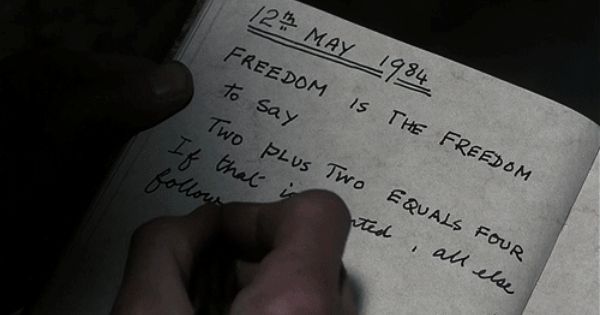
In the novel, the main character, Winston Smith says: Freedom is the freedom to say that 2 + 2 = 4

In BC today, Christy Clark’s  B.C. Liberal government  wants us to believe that 2 + 2 = 5.

They want us to believe that School Trustees are responsible for school closures.

They want us to believe that removing $4 200 000 000 from the education budget over the past 14 years means that they have “increased per student funding to the highest level”.

Perhaps the reason we have so much difficulty believing them is because we remember what happened to Oceania’s chocolate rations in Nineteen Eighty-Four:

It was therefore necessary to rewrite a paragraph of Big Brother’s speech, in such a way as to make him predict the thing that had actually happened. … Today’s issue contained a statement of the actual output, from which it appeared that the forecasts were in every instance grossly wrong. Winston’s job was to rectify the original figures by making them agree with the later ones. As for the third message, it referred to a very simple error which could be set right in a couple of minutes. As short a time ago as February, the Ministry of Plenty had issued a promise (a “categorical pledge” were the official words) that there would be no reduction of the chocolate ration during 1984. Actually, as Winston was aware, the chocolate ration was to be reduced from thirty grammes to twenty at the end of the present week. All that was needed was to substitute for the original promise a warning that it would probably be necessary to reduce the ration at some time in April.
From Nineteen Eighty-Four, Part One, Chapter 4

With so many of us having read  Nineteen Eighty-Four at school, the Government Communications and Public Engagement office certainly has their work cut out.

While they try to convince us about the benefits of the Prosperity Fund we’ll be thinking of the 20% of BC children who go to bed without a meal most nights a week.

While they try to get us to yes, we’ll be thinking no, committing thoughtcrimes as we do so.